Quick answer: Calories in everyday foods range from under 40 per cup (cooked green beans) to about 120 per tablespoon (olive oil). A large egg has about 72 calories, a slice of whole-wheat bread about 81, a cup of cooked white rice about 205 and 3 oz of cooked salmon about 156. Fats and oils are the most calorie-dense; watery vegetables and fruit are the least.
Knowing the calories in everyday foods makes it much easier to build meals that fill you up without going over your target. You do not need to memorize hundreds of numbers. A short list of staples, plus a few patterns, covers most of what lands on a typical plate.
All figures below come from the USDA’s Standard Reference data (the SR Legacy set inside USDA FoodData Central), using the household portions USDA lists.
Table of Contents
What a calorie actually measures
A food calorie (technically a kilocalorie, kcal) is a unit of energy. Food energy comes from three macronutrients plus alcohol:
- Protein: about 4 calories per gram
- Carbohydrate: about 4 calories per gram
- Fat: about 9 calories per gram
- Alcohol: about 7 calories per gram
That 9-calories-per-gram figure for fat is why a spoonful of oil carries more energy than a full cup of most vegetables. Water and fiber add weight and volume to food with few or no calories, which is why crunchy vegetables and fresh fruit score so low.
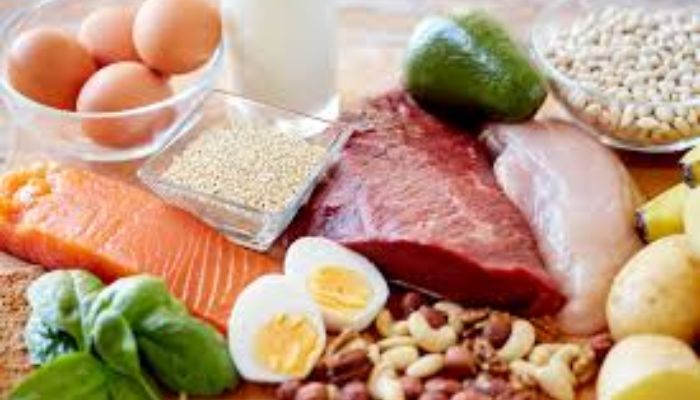
Calories in everyday foods chart
Values are for the portion shown, so you can compare the calories in everyday foods at a glance. “Calculated” means we scaled USDA’s listed portion to a more common one. The chart covers 32 staples across five food groups.
Protein foods
| Food | Portion | Calories |
|---|---|---|
| Egg, whole, raw or poached | 1 large (50 g) | 72 |
| Egg, fried | 1 large (46 g) | 90 |
| Salmon, coho, wild, cooked | 3 oz (85 g) | 156 |
| Tuna, white, canned in oil, drained | 3 oz (85 g) | 158 |
| Ground beef, 90% lean, broiled patty | 3 oz (85 g) | 184 |
| Tofu, firm (calcium sulfate) | 1/2 cup (126 g) | 181 |
| Cottage cheese, low fat 2% | 4 oz (113 g) | 92 |
| Black beans, cooked, no salt | 1 cup (185 g) | 240 |
For chicken, see our full chicken breast calories guide, which covers raw, roasted and skin-on numbers. Protein foods sit in the middle of the calories in everyday foods range, and the fattier cuts and oil-packed options climb fastest. Eggs get their own deep dive in our egg calories guide.
Grains and starches
| Food | Portion | Calories |
|---|---|---|
| White rice, long-grain, cooked | 1 cup (158 g) | 205 |
| Whole-wheat bread | 1 slice (32 g) | 81 |
| Pita bread, white | 1 large (60 g) | 165 |
| Egg noodles, cooked | 1 cup (160 g) | 221 |
| Potato, boiled, no skin | 1/2 cup (78 g) | 67 |
| Russet potato, baked with skin | 1 large (299 g) | 284 |
| Rice cake, brown rice and corn | 1 cake (9 g) | 35 |
Starches are where portion size matters most among the calories in everyday foods: a large baked potato (284) has more than four times the calories of a half cup of boiled potato (67).
Dairy
| Food | Portion | Calories |
|---|---|---|
| Milk, 3.7% fat (whole) | 1 cup (244 g) | 156 |
| Milk, skim, protein-fortified | 1 cup (246 g) | 101 |
| Yogurt, plain, low fat | 6 oz (170 g) | 107 |
| Cheddar cheese | 1 oz (28 g), calculated | 114 |
| Cream cheese | 1 tbsp (14.5 g) | 51 |
Within dairy, the calories in everyday foods depend mostly on fat: a cup of whole milk (156) has about 55 more calories than protein-fortified skim (101).
Fruit and vegetables
| Food | Portion | Calories |
|---|---|---|
| Apple slices, raw, no skin | 1 cup (110 g) | 53 |
| Grapes, raw | 1 cup (92 g) | 62 |
| Carrots, raw, chopped | 1 cup (128 g) | 52 |
| Broccoli, frozen, cooked | 1 cup (184 g) | 52 |
| Green beans, frozen, cooked | 1 cup (135 g) | 38 |
| Orange juice, chilled | 1 cup (249 g) | 117 |
Fruit and vegetables are the lightest calories in everyday foods, with juice as the main exception.
Want more fruit detail? We break down calories in a banana and calories in an apple by size.
Fats, nuts and spreads
| Food | Portion | Calories |
|---|---|---|
| Olive oil | 1 tbsp (13.5 g) | 119 |
| Butter, salted | 1 pat (5 g) | 36 |
| Mayonnaise, regular | 1 tbsp (13.8 g) | 94 |
| Almond butter | 1 tbsp (16 g) | 98 |
| Peanuts, dry-roasted | 1 oz (28 g), calculated | 166 |
| Mixed nuts with peanuts, oil-roasted | 1 oz (28 g) | 172 |
This group holds the densest calories in everyday foods, so it rewards measuring with a spoon or scale.
Patterns in the calories in everyday foods
A few rules of thumb explain most of the chart:
- Fat-rich foods are dense. One tablespoon of olive oil (119) has more calories than three cups of cooked green beans (114). That does not make oil “bad”; it just means measuring it is worth the five seconds.
- Cooking fat adds up. A fried large egg comes in at 90 calories versus 72 for a poached one, and the difference is mostly the fat in the pan.
- Portion beats food choice more often than you think. A cup of nuts would be over 800 calories; a 1 oz handful is around 170.
- Water-rich foods stretch a meal. Broccoli, carrots and green beans all sit near or under 50 calories per cup, so they add volume for very little energy.
- Drinks count. A cup of orange juice (117) has more than double the calories of a cup of apple slices (53).
A sample day built from the chart
To show how the calories in everyday foods add up, here is one simple day made only from items in the tables above. It is an example of how to use the numbers, not a meal plan.
| Meal | What’s on the plate | Calories |
|---|---|---|
| Breakfast | 2 poached eggs, 1 slice whole-wheat toast, 1 cup grapes | 287 |
| Lunch | 3 oz tuna, 1 large pita, 1 cup raw carrots | 375 |
| Snack | 6 oz low-fat yogurt, 1 cup apple slices | 160 |
| Dinner | 3 oz salmon, 1 cup white rice, 1 cup broccoli, 1 tbsp olive oil | 532 |
| Total | 1,354 |
Notice where the calories land. The tablespoon of olive oil at dinner has more calories than the broccoli and carrots combined (104). Swapping the tuna in oil for a smaller portion, or measuring the oil, changes the total far more than skipping the carrots ever could.
How to estimate calories for foods not on this list
These steps extend the calories in everyday foods chart to anything else you eat.
- Read the label first. On packaged foods, check the serving size before the calorie line. If you eat two servings, double everything.
- Weigh foods for a week. A cheap kitchen scale quickly trains your eye. After a few days, you will know what 30 g of cheese or 150 g of rice looks like on your plate.
- Look up the cooked or raw form you actually eat. Rice, pasta and meat change weight when cooked, so a “per 100 g raw” number will not match a cooked portion.
- Use USDA FoodData Central for whole foods. It is free, searchable and is the source behind most nutrition apps.
- Log the extras. Oil, butter, dressings and sauces are the most commonly forgotten items, and they are also the most calorie-dense.
Common mistakes when counting calories in everyday foods
- Eyeballing oil and spreads. A “drizzle” can easily be two tablespoons, or about 240 calories.
- Mixing up raw and cooked weights. 100 g of dry rice and 100 g of cooked rice are very different amounts of food.
- Forgetting drinks. Juice, milky coffees and smoothies count just like food.
- Trusting a single number too much. Labels and databases give averages, so treat every figure as a close estimate rather than an exact count.
Easy lower-calorie swaps
- Poach or boil eggs instead of frying them in butter or oil.
- Use one tablespoon of oil per pan, measured, rather than pouring freely.
- Fill half your plate with cooked vegetables, then add starch and protein.
- Pick whole fruit over juice when you want something sweet.
- Choose lower-fat dairy, such as low-fat cottage cheese or plain yogurt, if it suits your taste.
Small swaps like these work because they target the most calorie-dense items in the chart. For more food-by-food breakdowns, browse our calorie guides, or see how breakfast staples compare in bagel calories.
Frequently asked questions
Which of the calories in everyday foods are highest?
Pure fats and nuts top the list. Oils carry about 120 calories per tablespoon, and nuts run roughly 165 to 175 calories per ounce.
Which everyday foods have the fewest calories?
Non-starchy vegetables such as green beans, broccoli and carrots, at roughly 40 to 55 calories per cup cooked or chopped.
Are the calories in everyday foods on labels exact?
No. Labels and databases give averages. Real foods vary with size, variety and preparation, so treat any number as a close estimate.
What is the easiest way to learn portion sizes?
Weigh your usual foods on a kitchen scale for about a week. After that, most people can estimate common portions by eye much more accurately.
Sources
- USDA FoodData Central: SR Legacy data for all foods listed. Checked October 12, 2026.
- USDA National Agricultural Library, Standard Reference nutrient list ordered by energy (kcal per household measure). Checked October 12, 2026.
Nutrition information is an estimate and varies with brand, size and preparation. This article is general information, not medical advice.