Quick answer: In the eggs vs avocado comparison, a large egg (50 g) has about 72 calories and 6.3 g of protein, while a 50 g serving of avocado (about a third of a medium fruit) has about 80 calories, 7.3 g of fat and 3.4 g of fiber. Eggs win on protein; avocado wins on fiber. Together, they make a balanced breakfast.
Eggs vs avocado is less a contest than a partnership. Both are nutrient-dense breakfast staples with similar calories per serving, but they bring very different nutrients to the plate. Below you will find side-by-side numbers from USDA FoodData Central, plus practical ways to combine the two without letting portions creep up.
Table of Contents
Eggs vs avocado: per serving
Per serving, eggs vs avocado is a close race: a large egg and a 50 g portion of avocado land within 10 calories of each other. The difference is where those calories come from.
| Per serving | Large egg, raw (50 g) | Avocado (50 g) |
|---|---|---|
| Calories | 72 | 80 |
| Protein | 6.3 g | 1 g |
| Fat | 4.8 g | 7.3 g |
| Saturated fat | 1.6 g | 1.1 g |
| Carbohydrate | 0.4 g | 4.3 g |
| Fiber | 0 g | 3.4 g |
| Potassium | 69 mg | 243 mg |
| Vitamin C | 0 mg | 5 mg |
About 35% of an egg’s calories come from protein. In avocado, roughly 80% come from fat, mostly the monounsaturated kind.
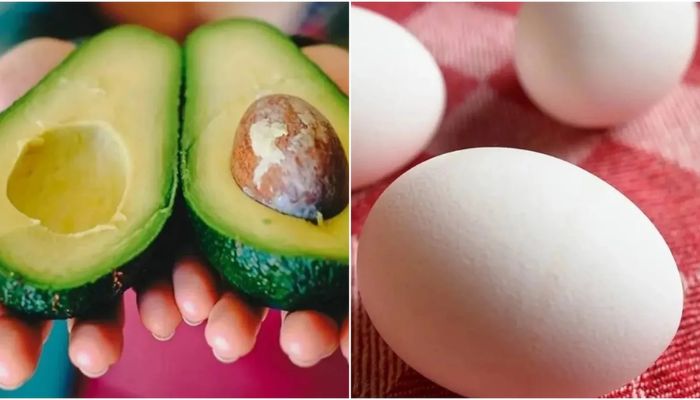
Eggs vs avocado: per 100 g
Comparing equal weights makes the pattern even clearer.
| Per 100 g | Egg, whole, raw | Avocado, raw |
|---|---|---|
| Calories | 143 | 160 |
| Protein | 12.6 g | 2 g |
| Fat | 9.5 g | 14.7 g |
| Carbohydrate | 0.7 g | 8.5 g |
| Fiber | 0 g | 6.7 g |
Gram for gram, avocado has slightly more calories, six times less protein and plenty of fiber. Eggs have no fiber at all.
How much is a “serving” in real life?
Labels use 50 g of avocado, but most of us do not cut avocados that neatly. Here is what common portions look like, using USDA weights.
| Portion | Weight | Calories |
|---|---|---|
| 1 large egg | 50 g | 72 |
| 2 large eggs | 100 g | 143 |
| 1/3 medium avocado | 50 g | 80 |
| 1/2 California (Hass) avocado | 68 g | 114 |
| 1 whole California avocado | 136 g | 227 |
| 1 whole Florida avocado | 304 g | 365 |
So the honest eggs vs avocado answer depends on how much avocado you scoop. Half a Hass avocado has more calories than an egg and a half, while a thin smear on toast may only be 40 to 50 calories.
How cooking changes egg calories
In any eggs vs avocado comparison, remember that avocado is almost always eaten raw, while eggs change a little depending on how you cook them.
| Egg (per 100 g) | Calories |
|---|---|
| Raw | 143 |
| Poached | 143 |
| Scrambled | 149 |
| Omelet | 154 |
| Hard-boiled | 155 |
| Fried | 196 |
Poaching and boiling add nothing. Frying adds the fat from the pan, which is why fried eggs are highest. Scrambled eggs and omelets vary with the milk, butter and cheese you add. For a deeper breakdown by size, see our guide to egg calories.
Avocado varieties
Not all avocados are the same, which shifts the eggs vs avocado math. California (Hass) avocados have about 167 calories per 100 g, while larger, smoother Florida avocados have about 120, because they contain more water and less fat.
That means a Florida avocado can look huge yet still be lighter per spoonful. The flavor is milder and the texture less buttery, so it works best in salsas and salads rather than as a spread.
When a recipe calls for one avocado, it usually means a Hass avocado, the type most supermarkets carry. If yours is a large Florida fruit, use about half of it to get a similar amount of flesh by weight.
Which is better for you?
There is no single winner in eggs vs avocado. Each one covers a gap the other leaves.
- For protein: eggs, clearly. Two large eggs give about 12.6 g.
- For fiber: avocado. Eggs contain none.
- For healthy fats: avocado is rich in monounsaturated fat; eggs offer a smaller amount of mixed fats.
- For potassium: avocado has about three and a half times more per 50 g.
- For staying full: the combination. Protein from eggs and fiber and fat from avocado work well together.
If you are building a lighter breakfast, think of eggs as the protein anchor and avocado as the topping, not the base.
Cost and convenience matter too. Eggs are usually the cheaper protein per serving and need only a few minutes in a pan or pot. Avocados need ripening time and turn brown quickly once cut, so they take a little more planning. If you eat breakfast on the go, a couple of hard-boiled eggs travel well, while avocado is easier to enjoy at home.
Eggs vs avocado for a lighter breakfast
When calories matter, portion control does most of the work. A few simple habits help:
- Weigh the avocado once. Put 50 g on a kitchen scale so you learn what a serving looks like.
- Cook eggs without much fat. Poach, boil or use a nonstick pan with a light spray.
- Add volume with vegetables. Tomatoes, spinach, cucumber and salsa bulk up the plate for very few calories.
- Store the rest properly. Leave the pit in the unused half, press plastic wrap onto the cut surface and refrigerate. A squeeze of lemon helps slow browning.
Easy ways to pair eggs and avocado
These combinations use USDA values for each part, so you can log them quickly.
- Avocado toast with a poached egg: one slice of whole-wheat toast (32 g), 50 g avocado and one large egg is about 233 calories.
- Baked eggs in avocado halves: crack a small egg into each half of a California avocado and bake until set. Each half with an egg is about 177 to 186 calories, depending on egg size.
- Avocado egg salad: mash 50 g avocado with two chopped hard-boiled eggs instead of mayonnaise, for about 235 calories.
- Breakfast bowl: two scrambled eggs, half a cup of low-sodium black beans, 50 g avocado and salsa come to roughly 370 calories with plenty of fiber.
Looking for more morning ideas? Try our cottage cheese pancakes or a bowl of almond granola.
Common mistakes when comparing eggs vs avocado
- Comparing one egg to one whole avocado. That is 72 calories against about 227, which is not a fair match.
- Forgetting cooking fat. A tablespoon of oil in the pan adds about 119 calories to your eggs.
- Counting avocado as protein. At 2 g per 100 g, it is mainly a fat and fiber food.
- Ignoring the extras. Toast, cheese and bacon often outweigh both the eggs and the avocado.
- Trusting a vague serving size. Recipes divide the total by the number of servings, so check the weight per portion if you track closely.
Eggs vs avocado: storage and shelf life
Practical details matter when you shop for the week. Raw eggs in the shell keep for 3 to 5 weeks in the fridge, and hard-boiled eggs for about a week, according to the FoodSafety.gov cold food storage chart.
Avocados are less forgiving. Ripen them on the counter, then move ripe ones to the fridge to buy a few extra days. On shelf life, eggs vs avocado is an easy win for eggs, so buy avocados in small batches.
Frequently asked questions
Which has more calories, eggs vs avocado?
Per 50 g serving they are close: about 72 calories for a large egg and 80 for avocado. A whole California avocado has about 227 calories, far more than one egg.
Is avocado a good source of protein?
Not really. Avocado has about 2 g of protein per 100 g. Pair it with eggs, beans or yogurt for protein.
Should I put eggs vs avocado on my toast?
Why not both? Combining them works well. One slice of whole-wheat toast, 50 g avocado and a poached egg comes to about 233 calories.
How much avocado is one serving?
A standard serving is 50 g, about a third of a medium avocado. Weighing it once on a kitchen scale helps you learn what it looks like.
More breakfast comparisons: bacon calories, bagel calories and calories in a banana. Browse everything in our calorie guides.
Sources
- USDA FoodData Central: Egg, whole, raw and cooked; Avocados, raw (all commercial varieties, California, Florida); Bread, whole-wheat; Beans, black, canned, low sodium; Oil, olive.
- Dietary Guidelines for Americans
Nutrition information is an estimate based on USDA FoodData Central averages and varies by brand, size and preparation. This article is general information, not medical advice.