Quick answer: Chicken breast calories are about 120 per 100 g raw and 165 per 100 g once roasted (skinless), with 22.5 g and 31 g of protein. A standard 3 oz (85 g) cooked portion comes to roughly 140 calories and 26 g of protein, and leaving the skin on raises 100 g roasted to 197 calories.
Chicken breast calories look different depending on where you read them, and that’s not because anyone got the math wrong. Raw and cooked weights give different numbers, the skin adds fat, and breading or sauce can double the count.
Below you’ll find every common version of the figure in one place, all taken from USDA FoodData Central, along with tips for weighing, cooking and logging it correctly.
Table of Contents
Chicken breast calories per 100 g
Here is how 100 g of boneless breast compares across the most common forms.
| Chicken breast, 100 g | Calories | Protein | Fat | Carbs |
|---|---|---|---|---|
| Raw, skinless | 120 | 22.5 g | 2.6 g | 0 g |
| Raw, with skin | 172 | 20.9 g | 9.3 g | 0 g |
| Roasted, skinless | 165 | 31 g | 3.6 g | 0 g |
| Grilled, skinless | 151 | 30.5 g | 3.2 g | 0 g |
| Stewed or poached, skinless | 151 | 29 g | 3 g | 0 g |
| Roasted, with skin | 197 | 29.8 g | 7.8 g | 0 g |
There are zero carbs in plain chicken, so nearly all of the energy comes from protein. In the roasted skinless version, protein supplies about three quarters of the calories, which is rare for any whole food. That high protein share is a big reason chicken breast calories get so much attention from people who track their meals.
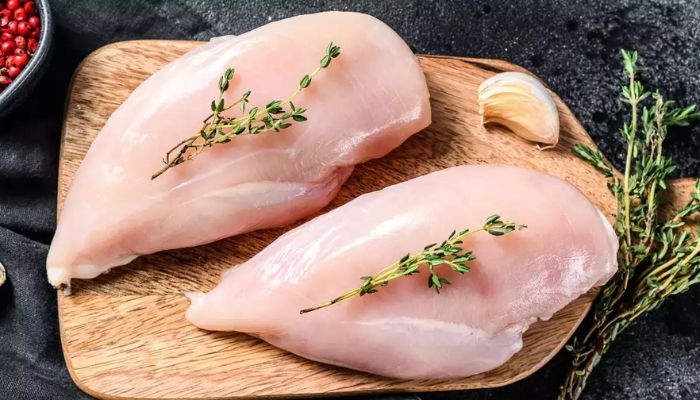
Raw vs cooked: why the numbers change
Chicken breast calories don’t go up in the pan. Cooking simply drives water out of the meat. The protein and fat stay, but the piece gets lighter, so each gram of cooked chicken carries more calories than each gram of raw chicken.
As a rough guide, raw breast loses about a quarter of its weight in the oven or pan. That’s why 100 g raw (120 calories) turns into roughly 75 g cooked, and 100 g of cooked meat lines up with about 133 g of raw meat.
Which weight should you log?
Pick one method and stick with it:
- Weighing raw is the most consistent, because the number doesn’t shift with cooking time.
- Weighing cooked is handy for batch cooking, as long as you choose a “cooked” or “roasted” entry in your app.
The mistake to avoid is weighing cooked chicken and logging a raw entry. That undercounts by roughly a quarter. Our guide on how to track calories covers weighing in more detail.
Chicken breast calories by serving size
| Portion | Calories | Protein |
|---|---|---|
| 3 oz (85 g) roasted, skinless | 140 | 26 g |
| 4 oz (113 g) raw, skinless | 136 | 25 g |
| 1 cup chopped roasted (140 g) | 231 | 43 g |
| 6 oz (170 g) roasted, skinless | 281 | 53 g |
| 1 raw breast, 170 g | 204 | 38 g |
| 1 large raw breast, 272 g | 326 | 61 g |
Supermarket breasts are often much bigger than one portion. If yours weigh 250 g or more, slice each one in half through the side to make two thin cutlets. They cook more evenly and are easier to portion.
How cooking method affects chicken breast calories
The meat itself barely changes between grilling, roasting and poaching. What you add around it is what moves the total.
| 3 oz (85 g) cooked | Calories | Protein | Fat |
|---|---|---|---|
| Grilled, skinless | 128 | 26 g | 2.7 g |
| Rotisserie breast meat, no skin | 122 | 24 g | 3 g |
| Roasted, skinless | 140 | 26 g | 3 g |
| Flour-coated and fried, with skin | 189 | 27 g | 7.5 g |
| Batter-fried, with skin | 221 | 21 g | 11.2 g |
| Breaded tenders (frozen, heated) | 214 | 14 g | 11 g |
A few points worth knowing:
- Oil counts. A teaspoon of olive oil adds about 40 calories and a tablespoon about 119. Brush or spray it on rather than pouring.
- Rotisserie chicken is a great shortcut, but the store-bought kind tends to be salty. The USDA entry lists 328 mg of sodium per 100 g of breast meat.
- Batter and breading double or even triple the calories per gram of protein. For a crispy coating with less oil, borrow the method from our air fryer popcorn shrimp, which works on chicken strips too.
- Glazes and creamy sauces can add more than the chicken. Measure them with a spoon.
Chicken breast calories vs other proteins
How does it stack up against other lean options? These are per 100 g values from USDA, cooked unless noted.
| Protein, 100 g | Calories | Protein | Fat |
|---|---|---|---|
| Pork tenderloin, roasted | 143 | 26.2 g | 3.5 g |
| Firm tofu (raw, calcium-set) | 144 | 17.3 g | 8.7 g |
| Turkey breast, roasted | 147 | 30.1 g | 2.1 g |
| Chicken drumstick meat, roasted | 155 | 24.2 g | 5.7 g |
| Chicken breast, roasted | 165 | 31 g | 3.6 g |
| Chicken thigh meat, roasted | 179 | 24.8 g | 8.2 g |
Breast meat offers the most protein per 100 g in this group, while thighs and drumsticks bring a little more fat and a richer taste. All of them fit in a lighter eating plan. If you prefer dark meat, try our air fryer chicken drumsticks.
Common mistakes when counting chicken breast calories
- Mixing raw and cooked entries. This is the biggest source of error, as explained above.
- Forgetting the skin. Skin-on breast has about 30 more calories per 100 g roasted and more than twice the fat.
- Ignoring the cooking fat. A tablespoon of oil in the pan adds about 119 calories, split across however many portions you serve.
- Guessing portion size. A “breast” can be anywhere from 170 g to over 270 g raw. A scale removes the guesswork.
- Skipping the sauce. Barbecue sauce, honey glazes and creamy dressings all need their own entry.
Easy tips for juicy, lean chicken breast
These habits keep chicken breast calories low without leaving you with dry, chewy meat.
- Even it out. Pound the thick end so the whole piece cooks at the same rate.
- Cook to temperature, not time. FoodSafety.gov lists 165°F (74°C) as the safe minimum for poultry. Pull it as soon as a thermometer reads that.
- Let it rest. Five minutes on the board keeps the juices in the meat.
- Try a quick brine. Thirty minutes in salted water makes lean breast noticeably juicier.
- Season boldly. Garlic, smoked paprika, lemon zest and herbs add plenty of flavor for almost no calories.
Storage and meal prep
Cooked chicken keeps for 3 to 4 days in the fridge and 2 to 6 months in the freezer, according to the FoodSafety.gov cold storage chart. Slice or shred it before storing so it’s ready for salads, wraps and bowls.
Batch cooking also makes chicken breast calories simple to log. Weigh the whole cooked batch, divide it evenly into containers, and every lunch carries the same count.
For a full week of lunches, see our high protein meal prep plan, or toss leftovers into our chicken spinach pasta, which has 37 g of protein per serving.
Frequently asked questions
How many chicken breast calories are in a whole breast?
It depends on size. A 170 g raw boneless, skinless breast has about 204 calories, while a large 272 g one has about 326. Weighing yours gives the most accurate count.
Are chicken breast calories higher cooked or raw?
Per gram, cooked chicken has more calories because water is lost during cooking. The whole piece has the same calories before and after; it just weighs less once cooked.
Does grilling lower the calories in chicken?
Only slightly. Grilled skinless breast is about 151 calories per 100 g compared with 165 roasted. The bigger difference comes from oil, skin, breading and sauce.
How much protein is in 100 g of chicken breast?
About 22.5 g raw and 31 g roasted, both skinless. A 3 oz cooked portion has about 26 g.
Sources
- USDA FoodData Central, SR Legacy: chicken breast raw, roasted, grilled, stewed, fried and rotisserie; breaded tenders; pork tenderloin, tofu, turkey breast, drumstick and thigh; olive oil.
- FoodSafety.gov: safe minimum internal temperatures.
- FoodSafety.gov: cold food storage chart.
Nutrition figures are estimates based on USDA averages and vary with size, cut and cooking. This article is general information, not medical advice.