Quick answer: Cottage cheese calories run from about 81 to 111 per half cup (113 g), depending on fat level, based on USDA FoodData Central. Low-fat 1% has 81 calories and 14 g protein per half cup, 2% has 92 calories, and full-fat 4% has 111 calories with 12.6 g protein.
Cottage cheese calories are lower than most people expect for such a filling food. A half cup of any common style lands under 115 calories, and every version carries 10 to 14 g of protein. The real differences come from milkfat, sodium and what you stir in, so this guide breaks down each one with clear numbers.
Table of Contents
Cottage cheese calories at a glance
All values below come from USDA SR Legacy entries for plain cottage cheese with nothing added. A half cup is about 113 g (4 oz), the portion printed on most tubs.
| Cottage cheese type (½ cup, 113 g) | Calories | Protein | Carbs | Fat | Sodium |
|---|---|---|---|---|---|
| Nonfat (dry curd) | 81 | 11.7 g | 7.5 g | 0.3 g | 420 mg |
| Low-fat 1% | 81 | 14.0 g | 3.1 g | 1.2 g | 459 mg |
| Low-fat 2% | 92 | 11.8 g | 5.4 g | 2.6 g | 348 mg |
| Full-fat 4% (creamed) | 111 | 12.6 g | 3.8 g | 4.9 g | 356 mg |
| 1%, no salt added | 81 | 14.0 g | 3.1 g | 1.1 g | 15 mg |
| 1%, lactose reduced | 84 | 14.0 g | 3.6 g | 1.1 g | 249 mg |
| Creamed, with fruit | 110 | 12.1 g | 5.2 g | 4.4 g | 389 mg |
The gap in cottage cheese calories between the lightest and richest plain options is only about 30 per half cup, roughly a teaspoon of butter. Fat level matters, but less than many people think.
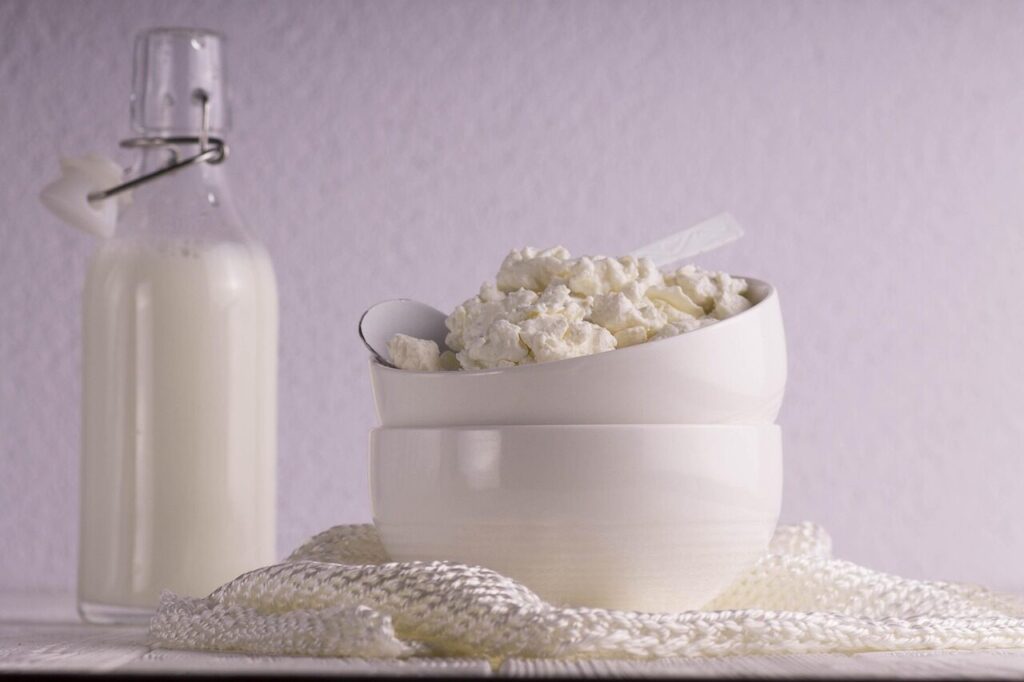
Cottage cheese calories per 100 g and per cup
If you weigh food or log it in an app, per-100 g cottage cheese calories are the most useful numbers. Full-fat cottage cheese has 98 calories per 100 g, 2% has 81, and both 1% and nonfat have 72.
Cups are trickier, because curd size and packing change the weight. USDA lists a loose cup of small-curd 4% at 225 g and large-curd 4% at 210 g. Nonfat dry curd has no creamy dressing filling the gaps, so a cup weighs only 145 g.
| Type | Per 100 g | Per cup | Cup weight (USDA) |
|---|---|---|---|
| Full-fat 4%, small curd | 98 | 220 | 225 g |
| Low-fat 2% | 81 | 183 | 226 g |
| Low-fat 1% | 72 | 163 | 226 g |
| Nonfat dry curd | 72 | 104 | 145 g |
A tablespoon (about 14 g) adds only 10 to 14 calories, so it makes an easy spread or dip base. Weigh your usual scoop once or twice to learn what it really holds. Our guide on how to track calories covers simple weighing habits.
Protein in cottage cheese by fat level
Protein is the main reason people buy cottage cheese. Per half cup, every type gives you between 11.7 and 14 g, and the 1% version comes out on top.
A useful way to compare is protein per 100 calories:
- Low-fat 1%: 17.2 g protein per 100 calories
- Nonfat dry curd: 14.4 g per 100 calories
- Low-fat 2%: 12.9 g per 100 calories
- Full-fat 4%: 11.3 g per 100 calories
For the most protein with the lowest cottage cheese calories, 1% is the best pick. If you prefer a creamier texture, 2% is a sensible middle ground that still keeps a half cup under 100 calories. Most of the protein is casein, a slower-digesting milk protein.
How cottage cheese compares with other protein foods
Here is how cottage cheese calories and protein stack up against other common high-protein foods, using USDA SR Legacy values.
| Food and portion | Calories | Protein | Protein per 100 kcal |
|---|---|---|---|
| Cottage cheese 1%, ½ cup (113 g) | 81 | 14.0 g | 17.2 g |
| Greek yogurt, plain nonfat, 170 g | 100 | 17.3 g | 17.3 g |
| Greek yogurt, plain whole milk, 170 g | 165 | 15.3 g | 9.3 g |
| Ricotta, part skim, ½ cup (124 g) | 171 | 14.1 g | 8.3 g |
| Large egg (50 g) | 72 | 6.3 g | 8.8 g |
| Firm tofu, ½ cup (126 g) | 181 | 21.8 g | 12.0 g |
Low-fat cottage cheese and nonfat Greek yogurt are almost tied for protein per calorie, while part-skim ricotta has about twice the calories per half cup. For more on eggs, see our breakdown of the protein in an egg.
The sodium catch
Sodium is where cottage cheese surprises people. A half cup of regular 1% has about 459 mg, which is around 20% of the 2,300 mg Daily Value the FDA uses on the Nutrition Facts label.
A full cup doubles that to more than 900 mg. A few easy ways to keep it in check:
- Look for “no salt added” tubs. USDA lists that 1% style at just 15 mg per half cup, with the same calories and protein.
- Compare labels between brands, since sodium varies more than calories do.
- Pair it with fruit or fresh vegetables instead of crackers, pickles or deli meat.
What you add changes cottage cheese calories most
Plain cottage cheese calories are low, so toppings often decide the final number. Fresh produce adds very little, while nuts, seeds and sweeteners add up quickly.
| Topping | Amount | Calories | Protein |
|---|---|---|---|
| Blueberries | ½ cup (74 g) | 42 | 0.5 g |
| Pineapple chunks | ½ cup (83 g) | 42 | 0.4 g |
| Peach, sliced | 1 medium (150 g) | 58 | 1.4 g |
| Cherry tomatoes | ½ cup (75 g) | 13 | 0.7 g |
| Cucumber slices | ½ cup (52 g) | 8 | 0.3 g |
| Chia seeds | 10 g | 49 | 1.7 g |
| Almonds, chopped | 10 g | 60 | 2.1 g |
Some easy combinations, built from the numbers above:
- Savory snack bowl: ½ cup 2% cottage cheese with ½ cup cherry tomatoes and ½ cup cucumber comes to about 113 calories and 12.8 g protein.
- Berry breakfast bowl: ½ cup 1% cottage cheese with ½ cup blueberries and 10 g chia seeds comes to about 172 calories and 16.2 g protein.
- Big pineapple bowl: 1 cup 1% cottage cheese with ½ cup pineapple comes to about 205 calories and 28.4 g protein.
Try our cottage cheese pancakes for a warm breakfast, or blend a scoop into a dip like our yogurt fruit dip.
Choosing a tub by cottage cheese calories
- Lowest calories, most protein: low-fat 1%.
- Creamier with modest calories: 2%.
- Lowest sodium: a no-salt-added 1% tub.
- Fruit cups: check the label. USDA’s creamed-with-fruit entry has 110 calories per half cup, and sweetened cups can run higher.
Large versus small curd is only about texture; cottage cheese calories per gram are the same.
Common mistakes when counting cottage cheese calories
A few habits make cottage cheese calories harder to log accurately:
- Logging a cup that is really a heaped bowl. A generous serving can easily be 1.5 cups.
- Using the wrong fat level. Logging 1% when the tub is 4% understates calories by about 30 per half cup.
- Forgetting the toppings. A handful of granola or a drizzle of honey can add more calories than the cottage cheese itself.
Storage and food safety
Keep cottage cheese in the fridge at 40°F (4°C) or below, close the lid tightly and use a clean spoon each time. Follow the date on the tub, and toss it if it smells sour, turns yellowish or shows mold.
FoodSafety.gov advises not leaving perishable food out for more than 2 hours, or 1 hour above 90°F (32°C). That applies to a cottage cheese dip on the party table too. Freezing makes it grainy, so save frozen tubs for cooking.
How cottage cheese fits a lighter eating plan
With modest cottage cheese calories and plenty of protein, a tub works as a snack, a breakfast base or a creamy swap for richer cheeses in sauces and bakes. For more snack ideas, see our list of filling low calorie snacks, and browse all our calorie guides for side-by-side numbers on everyday foods. If you are planning ahead, our high protein meal prep guide shows how to build balanced weekly meals.
Frequently asked questions
How many cottage cheese calories are in a half cup?
A half cup (113 g) of plain cottage cheese has about 81 calories for 1% or nonfat, 92 for 2% and 111 for full-fat 4%, based on USDA data. Each gives you roughly 12 to 14 g of protein.
Are cottage cheese calories lower than Greek yogurt?
They are very close. A half cup of 1% cottage cheese has 81 calories and 14 g protein, while 170 g of plain nonfat Greek yogurt has 100 calories and 17.3 g protein. Per calorie, the protein is nearly identical.
Which cottage cheese has the most protein?
Low-fat 1% cottage cheese gives the most protein per calorie, with about 14 g in a half cup for 81 calories. Full-fat 4% has slightly less protein and about 30 more calories per half cup.
Is cottage cheese high in sodium?
Regular cottage cheese is fairly salty, with about 350 to 460 mg of sodium per half cup. No-salt-added tubs are a much lower-sodium option, with the same calories and protein.
Sources
- USDA FoodData Central: SR Legacy entries for cottage cheese (creamed 4%, low-fat 2%, low-fat 1%, nonfat dry curd, no salt added, lactose reduced, with fruit), Greek yogurt, ricotta, egg, firm tofu, blueberries, pineapple, peaches, cherry tomatoes, cucumber, chia seeds and almonds
- FDA: How to understand and use the Nutrition Facts label
- FoodSafety.gov cold food storage charts
Nutrition information is an estimate based on USDA data and will vary by brand, portion and added ingredients. This article is general information, not medical advice.