Quick answer: High protein meal prep works best when you cook four or five simple parts once, then mix them into boxes all week. Using USDA figures, the five boxes in this plan land between about 420 and 510 calories with 31 to 45 g of protein each, built from chicken, turkey, salmon, tofu, eggs, beans and lentils.
High protein meal prep does not need fancy recipes. You need a few lean proteins, a couple of starches and a pile of vegetables, all cooked in one session. This guide gives you a two-hour plan, per-portion numbers for each part, and five ready-made box combinations. Every number is calculated from USDA FoodData Central.
Table of Contents
What makes high protein meal prep work
A good prep week has three layers:
- A lean protein in every box, about 20 to 37 g per portion.
- A measured starch, such as brown rice, sweet potato, beans or lentils.
- Lots of vegetables for volume and fiber at very few calories.
Cooking these separately, instead of one big casserole, lets you change the mix from day to day. It also makes the calories easy to track, because each part has a known weight. If you are new to weighing food, our guide on how to track calories covers the basics.
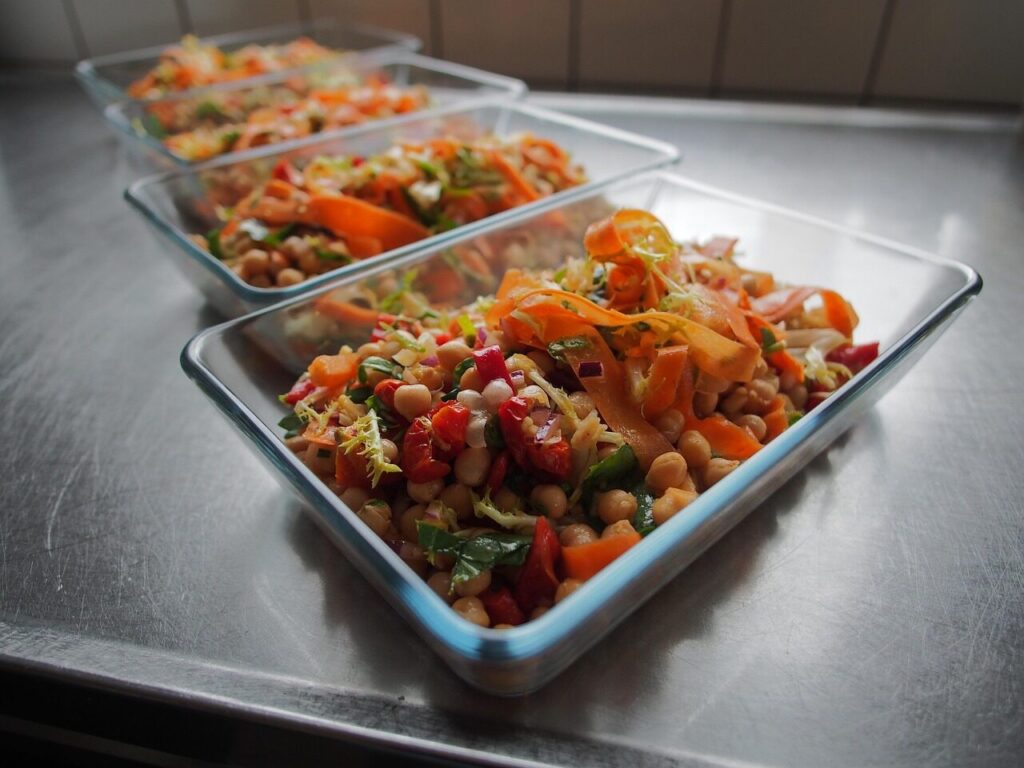
High protein meal prep components: calories per portion
These are cooked weights. Weigh after cooking so your numbers match the table.
| Component | Portion (cooked) | Calories | Protein | Carbs | Fat |
|---|---|---|---|---|---|
| Roasted chicken breast | 120 g | 198 | 37.2 g | 0 g | 4.3 g |
| Ground turkey, 93% lean | 85 g | 181 | 23.0 g | 0 g | 9.9 g |
| Salmon fillet, baked | 113 g | 233 | 25.0 g | 0 g | 14.0 g |
| Firm tofu | 120 g | 173 | 20.7 g | 3.3 g | 10.5 g |
| Hard-boiled eggs | 2 large | 155 | 12.6 g | 1.1 g | 10.6 g |
| Plain nonfat Greek yogurt | 170 g | 100 | 17.3 g | 6.1 g | 0.7 g |
| Lentils, boiled | 1/2 cup (99 g) | 115 | 8.9 g | 19.9 g | 0.4 g |
| Chickpeas, canned, rinsed | 1 cup (152 g) | 210 | 10.7 g | 34.8 g | 3.8 g |
| Black beans, low sodium | 130 g | 118 | 7.8 g | 21.5 g | 0.4 g |
| Brown rice | 150 g (about 3/4 cup) | 184 | 4.1 g | 38.4 g | 1.5 g |
| Sweet potato, baked | 150 g | 135 | 3.0 g | 31.1 g | 0.2 g |
| Broccoli, steamed | 1 cup (156 g) | 55 | 3.7 g | 11.2 g | 0.6 g |
Chicken breast gives the most protein per calorie here, about 19 g per 100 calories. Greek yogurt is close behind at about 17 g. Our chicken breast calories guide breaks down other cuts and cooking methods.
Five high protein meal prep boxes
Each box below includes 1 teaspoon of olive oil (40 calories) where the parts are roasted or dressed.
| Box | What goes in | Calories | Protein | Fiber |
|---|---|---|---|---|
| 1. Chicken, rice and broccoli | Chicken 120 g, brown rice 150 g, broccoli 156 g, oil | 477 | 45.0 g | 7.5 g |
| 2. Turkey burrito bowl | Turkey 85 g, black beans 130 g, red pepper 75 g, brown rice 100 g, oil | 482 | 34.4 g | 12.1 g |
| 3. Chickpea salad with eggs | Chickpeas 152 g, cucumber, cherry tomatoes, pepper, carrot, 2 eggs, Greek yogurt dressing 60 g, oil | 510 | 32.0 g | 14.3 g |
| 4. Salmon and sweet potato | Salmon 113 g, sweet potato 150 g, broccoli 156 g | 422 | 31.7 g | 10.1 g |
| 5. Tofu and lentil bowl | Tofu 120 g, lentils 99 g, broccoli 156 g, brown rice 100 g, oil | 505 | 36.1 g | 17.3 g |
The chickpea salad box is a great make-ahead lunch because it tastes good cold. Add the dressing on the day you eat it so the vegetables stay crisp.
For a quick snack, 170 g of nonfat Greek yogurt with 1/2 cup of raspberries comes to about 133 calories and 18 g of protein. See our raspberry calories guide for other serving sizes.
A two-hour prep plan
- Heat the oven to 425°F (220°C). Put sweet potatoes in to bake whole, about 45 minutes.
- Start the grains and lentils. Cook brown rice and lentils on the stove at the same time.
- Roast the chicken and tofu. Use separate sheet pans with a little oil and spice.
- Brown the turkey. Cook it in a skillet with onion, cumin and chili powder.
- Boil the eggs. Cool them in cold water and peel.
- Steam the broccoli for 3 to 4 minutes so it stays bright and firm.
- Bake the salmon last, about 12 to 15 minutes, since it is best eaten within a day or two.
- Cool, weigh and pack. Divide into containers using the portions above.
How to adjust portions for your needs
The boxes in this guide are a starting point, not a rule. If you need more energy, add a second portion of the starch or a piece of fruit. If you want fewer calories, increase the vegetables and reduce the rice or sweet potato by a third. Keep the protein portion the same, because it is the part that makes each box filling.
Weigh one box of each type the first week. After that, most people can portion by eye using the same containers, and only re-check with the scale every couple of weeks.
Flavor ideas that keep the week interesting
The same chicken and rice can taste like four different meals if you change the seasoning. Mix spices into the protein before cooking, and add fresh flavors when you eat.
| Style | Season with | Finish with |
|---|---|---|
| Mexican | Cumin, chili powder, garlic | Salsa, lime, cilantro |
| Mediterranean | Oregano, lemon zest, garlic | Cucumber, tomato, Greek yogurt |
| Asian-inspired | Ginger, garlic, a little soy sauce | Scallions, sesame seeds, rice vinegar |
| Smoky barbecue | Smoked paprika, onion powder | A spoon of barbecue sauce |
| Herby | Thyme, rosemary, black pepper | Lemon juice, parsley |
Dry spices, herbs, citrus, vinegar and salsa add very few calories. Sauces with sugar or oil are fine too, but measure them.
Packing and labeling tips
- Use containers with two or three compartments so wet and dry parts stay apart.
- Write the date and the calories on a strip of tape on each lid.
- Keep dressings and crunchy toppings in small separate pots.
- Stack the boxes you will eat first at the front of the fridge.
Safe cooking temperatures
Use a food thermometer. According to FoodSafety.gov, cook chicken and ground turkey to 165°F (74°C), salmon to 145°F (63°C), and egg dishes to 160°F (71°C).
Storing your high protein meal prep
- Refrigerate cooked food within 2 hours of cooking. Shallow containers help it cool quickly.
- Eat refrigerated leftovers within 3 to 4 days, following the FoodSafety.gov storage chart.
- Freeze anything you will not eat by day 3 or 4. Rice, lentils, beans, turkey and chicken all freeze well.
- Reheat leftovers to 165°F (74°C) before eating.
A practical rhythm is to prep on Sunday for Monday to Wednesday, then do a quick second batch on Wednesday evening.
Common high protein meal prep mistakes
- Skipping the scale. Eyeballing rice is the easiest way for a 480-calorie box to become 650.
- Heavy sauces. Two tablespoons of a creamy dressing can add 100 calories or more. Use Greek yogurt, salsa, lemon or vinegar instead.
- Too little variety. Eating the same box five days running is how plans fail. Swap one part each day.
- Overcooking chicken. Pull it at 165°F and rest it, so it stays moist on day three.
- Forgetting fiber. Beans, lentils and vegetables make the box more filling at the same calories.
Easy swaps
- Swap brown rice for extra broccoli to save about 130 calories per box.
- Use tofu or lentils for a plant-based week. The tofu Buddha bowl is a ready-made option.
- Make air fryer chicken drumsticks when you want something different from breast meat.
- Shape ground turkey into patties with our turkey burger recipe.
Frequently asked questions
How much protein should a high protein meal prep box have?
The boxes in this plan contain about 31 to 45 g of protein each, which many people find filling for a main meal. Your own needs depend on your size, activity and goals.
How long does high protein meal prep last in the fridge?
FoodSafety.gov advises eating refrigerated leftovers within 3 to 4 days. Freeze any portions you will not eat by then.
What is the cheapest protein for meal prep?
Eggs, lentils, canned beans and chickpeas are usually the lowest-cost options per serving. Chicken breast and ground turkey bought in larger packs are also good value.
Can high protein meal prep be vegetarian?
Yes. Combine tofu, lentils, chickpeas, eggs and Greek yogurt. The tofu and lentil box in this guide has about 36 g of protein.
Sources
- USDA FoodData Central: chicken breast, ground turkey, salmon, tofu, eggs, Greek yogurt, lentils, chickpeas, black beans, brown rice, sweet potato, broccoli, vegetables, olive oil, raspberries.
- FoodSafety.gov: safe minimum internal temperatures and cold food storage.
Nutrition information in this article is an estimate based on USDA FoodData Central and varies with brands and portions. This article is general information, not medical advice.