Quick answer: The most filling low calorie snacks pair protein or fiber with lots of volume. Greek yogurt with raspberries (133 calories, 18 g protein), tuna cucumber bites (111 calories, 22 g protein), air-popped popcorn (93 calories for 3 cups) and a large orange (86 calories) all beat a 100-calorie pack of crackers for staying power.
Low calorie snacks only help if they actually hold you until the next meal. A small handful of crackers can disappear in two minutes and leave you hungrier than before, while a bowl of yogurt and berries with the same calories can carry you through the afternoon.
This guide lists 25 low calorie snacks with their calories, protein and fiber, all worked out from USDA data, plus simple rules for building your own.
Table of Contents
What makes low calorie snacks filling?
Three things do most of the work, and the best snacks combine at least two of them.
- Protein. Foods like Greek yogurt, cottage cheese, eggs, tuna and turkey give you a lot of protein for few calories. Protein tends to feel more satisfying than the same calories from refined starch or sugar.
- Fiber. Fruit, vegetables, beans and whole grains bring fiber, which slows you down and adds bulk. Raspberries are a standout, with 8 g of fiber in a single cup.
- Volume and water. Watermelon, cucumber, peppers and popcorn take up a lot of room on the plate and in your stomach for very few calories. Three cups of air-popped popcorn is a big bowl at under 100 calories.
What doesn’t help much: small, dry low calorie snacks that are quick to eat, such as crackers, pretzels or a mini granola bar. The calories go by fast.
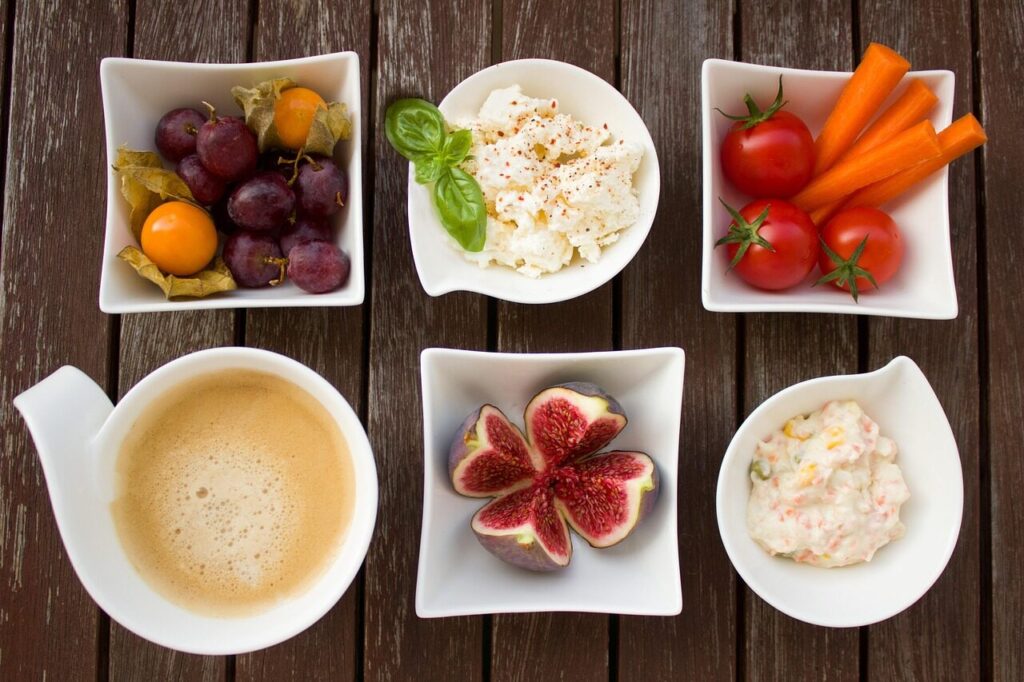
25 low calorie snacks that keep you full
Every number below was calculated from USDA FoodData Central values for the exact portion listed. Brands vary, so check your label if you buy a flavored or packaged version.
| Snack | Portion | Calories | Protein | Fiber |
|---|---|---|---|---|
| 1. Nonfat Greek yogurt with raspberries | 170 g container + 1/2 cup (62 g) raspberries | 133 | 18.1 g | 4 g |
| 2. Cottage cheese with blueberries | 1/2 cup (113 g) + 1/2 cup (74 g) blueberries | 134 | 12.4 g | 1.8 g |
| 3. Two hard-boiled eggs | 2 large (100 g) | 155 | 12.6 g | 0 g |
| 4. Air-popped popcorn | 3 cups (24 g) | 93 | 3.1 g | 3.5 g |
| 5. Apple with peanut butter | 1 medium apple (212 g) + 1 tbsp (16 g) | 221 | 4.1 g | 5.7 g |
| 6. Edamame, shelled | 1/2 cup shelled (78 g) | 94 | 9.3 g | 4.1 g |
| 7. Baby carrots and hummus | 10 medium (100 g) + 2 tbsp (30 g) | 106 | 3 g | 4.5 g |
| 8. Roasted chickpeas (from cooked) | 1/2 cup cooked (82 g), roasted without oil | 134 | 7.3 g | 6.2 g |
| 9. Part-skim mozzarella stick and cherry tomatoes | 1 oz (28 g) + 1 cup (149 g) | 98 | 8.1 g | 1.8 g |
| 10. Pear | 1 medium (177 g) | 112 | 0.7 g | 5.5 g |
| 11. Orange | 1 large (184 g) | 86 | 1.7 g | 4.4 g |
| 12. Frozen grapes | 1 cup (151 g) | 104 | 1.1 g | 1.4 g |
| 13. Pistachios (buy them in the shell) | 1/2 oz kernels (14 g, about 24 nuts) | 80 | 2.9 g | 1.4 g |
| 14. Tuna cucumber bites | 1/2 can light tuna in water (82 g) + 1 cup cucumber slices (104 g) | 111 | 21.6 g | 0.5 g |
| 15. Raspberries | 1 cup (123 g) | 64 | 1.5 g | 8 g |
| 16. Banana | 1 medium (118 g) | 105 | 1.3 g | 3.1 g |
| 17. Rice cakes with peanut butter | 2 brown rice cakes (18 g) + 1 tbsp (16 g) | 165 | 5 g | 1.6 g |
| 18. Watermelon | 2 cups diced (304 g) | 91 | 1.9 g | 1.2 g |
| 19. Red pepper strips and hummus | 1 medium pepper (119 g) + 2 tbsp (30 g) | 102 | 3.5 g | 4.1 g |
| 20. Snap peas | 1 cup whole (63 g) | 26 | 1.8 g | 1.6 g |
| 21. Turkey and cucumber roll-ups | 2 oz roasted turkey breast (57 g) + 1/2 cup cucumber (52 g) | 92 | 17.5 g | 0.3 g |
| 22. Kiwis | 2 fruits (138 g) | 84 | 1.6 g | 4.1 g |
| 23. Glass of 1% milk | 1 cup (244 g) | 102 | 8.2 g | 0 g |
| 24. Blueberries with Greek yogurt dip | 1 cup blueberries (148 g) + 1/4 cup Greek yogurt (57 g) | 118 | 6.9 g | 3.6 g |
| 25. Savory cottage cheese bowl | 1/2 cup cottage cheese (113 g) + 1/2 cup cherry tomatoes (75 g) + 1/2 cup cucumber (52 g) | 113 | 12.8 g | 1.2 g |
Twenty-two of these 25 low calorie snacks come in under 150 calories. The three that go higher (the eggs, the apple with peanut butter and the rice cakes) earn their spot because they hold you for a long time.
The best high-protein picks
If you get hungry again an hour after snacking, start with these protein-rich low calorie snacks.
- Greek yogurt with raspberries is the top all-rounder: 18 g of protein and 4 g of fiber for 133 calories. Choose plain nonfat yogurt and let the fruit do the sweetening.
- Tuna cucumber bites pack 22 g of protein for 111 calories. Mix half a can of tuna with a spoon of mustard or plain yogurt and pile it onto thick cucumber rounds.
- Turkey roll-ups give 17.5 g of protein for 92 calories. Wrap sliced roasted turkey breast around cucumber sticks.
- Cottage cheese works sweet with blueberries or savory with tomatoes, cucumber and black pepper. Both versions stay under 135 calories with about 12 to 13 g of protein.
- Hard-boiled eggs are the easiest grab-and-go option. For the full breakdown by size, see our guide to protein in an egg.
The best high-fiber and high-volume picks
These are the low calorie snacks to reach for when you want something to crunch or a big bowl to work through.
- Raspberries have the most fiber per calorie on the list: 8 g for 64 calories. Our raspberry calories guide covers other portion sizes.
- Air-popped popcorn is a whole grain. Season it with smoked paprika, garlic powder or a light dusting of parmesan instead of butter.
- Pears, oranges and kiwis all deliver 4 to 5.5 g of fiber for under 115 calories, and they need no prep at all.
- Roasted chickpeas combine fiber and plant protein. Pat cooked chickpeas very dry, season them and roast at 400°F (200°C) until crisp.
- Snap peas are the lowest-calorie item here at 26 calories per cup, a great add-on to a protein snack.
Smart combos: protein plus fiber
Pairing a protein food with a fiber food is the simplest way to make low calorie snacks last. A few easy matches:
- Apple slices with 1 tablespoon of peanut butter. Measure the peanut butter, since a heaped spoon can double the fat.
- Baby carrots or red pepper strips with 2 tablespoons of hummus.
- A part-skim mozzarella stick with a cup of cherry tomatoes.
- Blueberries dunked in plain Greek yogurt. For a party-sized version, try our yogurt fruit dip.
- A banana with a glass of 1% milk, which together come to about 207 calories and 9.5 g of protein.
Our pages on calories in an apple and calories in a banana show how size changes the count.
How to build your own low calorie snacks
Use this simple template and you won’t need a list at all.
- Pick a protein base (about 60 to 100 calories): Greek yogurt, cottage cheese, an egg, tuna, turkey, edamame or a cheese stick.
- Add a fiber or volume food (about 30 to 80 calories): berries, an orange, crunchy vegetables or popcorn.
- Keep fats measured: nuts, nut butter, hummus and cheese are great in small amounts. Weigh or spoon them rather than eating from the jar.
- Add flavor for free: cinnamon, chili flakes, lemon, herbs, mustard and hot sauce cost almost nothing.
If you track your intake, a kitchen scale makes this much easier. Our guide on how to track calories walks through it step by step.
Common mistakes with low calorie snacks
- Eating straight from the bag. Portion nuts, popcorn and crackers into a bowl first.
- Drinking your snack. Juice and sweet coffee drinks add calories without the chewing and bulk of whole food.
- Going too small. A 50-calorie snack that leaves you hungry often leads to a second and third snack. A 130-calorie snack with protein can be the better choice.
- Skipping prep. Wash fruit, cut vegetables and boil eggs once or twice a week so the easy option is also the healthy one.
Storage and food safety tips
Many low calorie snacks need the fridge. Hard-boiled eggs keep there for up to one week, according to FoodSafety.gov. Keep yogurt, cottage cheese, opened tuna and deli turkey cold, and don’t leave them at room temperature for more than two hours.
For crunchy fruit chips you can make ahead, see our air fryer apple chips.
Frequently asked questions
What are the most filling low calorie snacks?
Snacks that combine protein or fiber with volume tend to be the most filling. Greek yogurt with berries, tuna on cucumber, cottage cheese, air-popped popcorn and whole fruit like oranges and pears are good examples.
How many calories should a snack have?
There is no single rule. Many people find 100 to 200 calories works well between meals, but the right amount depends on your total daily needs and how long it is until your next meal.
Are low calorie snacks with protein better?
Protein helps many people feel satisfied for longer, so snacks with some protein are often a smart pick. Pairing protein with fruit or vegetables adds fiber and volume too.
Is popcorn a good low calorie snack?
Yes, if it is air-popped or lightly oiled. Three cups of air-popped popcorn has about 93 calories and 3.5 g of fiber. Butter and sweet coatings add calories quickly.
Sources
- USDA FoodData Central, SR Legacy data: Greek yogurt, cottage cheese, eggs, popcorn, fruits, vegetables, hummus, chickpeas, nuts, tuna, turkey breast, milk and rice cakes.
- FoodSafety.gov: cold food storage chart.
- Dietary Guidelines for Americans: general guidance on fruits, vegetables and protein foods.
Nutrition for each snack is an estimate based on USDA averages and the portions listed. This article is general information, not medical advice.