Quick answer: White rice calories come to about 130 per 100 g cooked, so a level cup of cooked long-grain white rice (158 g) has about 205 calories, 4.3 g protein and 44.5 g carbs, based on USDA FoodData Central. A half-cup side is about 103 calories. Butter, oil and frying add more than most people expect.
White rice calories are easy to underestimate because rice is rarely measured. A neat half cup and a heaped dinner-plate mound look similar at a glance, yet one can carry three or four times the energy of the other. This guide gives you clear numbers for every common portion and rice type, then shows simple ways to keep a rice dinner lighter without giving it up.
Table of Contents
White rice calories at a glance
Cooked white rice is mostly starch and water. Per 100 g, white rice calories come to about 130, with 2.7 g protein, 28.2 g carbohydrate, 0.3 g fat and 0.4 g fiber. It has almost no fat, so the calories come almost entirely from carbohydrate.
The table below uses USDA SR Legacy values for enriched long-grain white rice cooked in plain water with no salt or fat.
| Portion of cooked white rice | Weight | Calories | Protein | Carbs |
|---|---|---|---|---|
| 1 oz | 28 g | 36 | 0.8 g | 7.9 g |
| 1/2 cup | 79 g | 103 | 2.1 g | 22.3 g |
| 3/4 cup | 119 g | 155 | 3.2 g | 33.5 g |
| 100 g | 100 g | 130 | 2.7 g | 28.2 g |
| 1 cup | 158 g | 205 | 4.3 g | 44.5 g |
| 1 1/2 cups | 237 g | 308 | 6.4 g | 66.8 g |
| 2 cups | 316 g | 411 | 8.5 g | 89.0 g |
A typical takeout container or a generous dinner scoop often lands between 1 1/2 and 2 cups. That is why white rice calories can quietly reach 300 to 400 in a single meal.
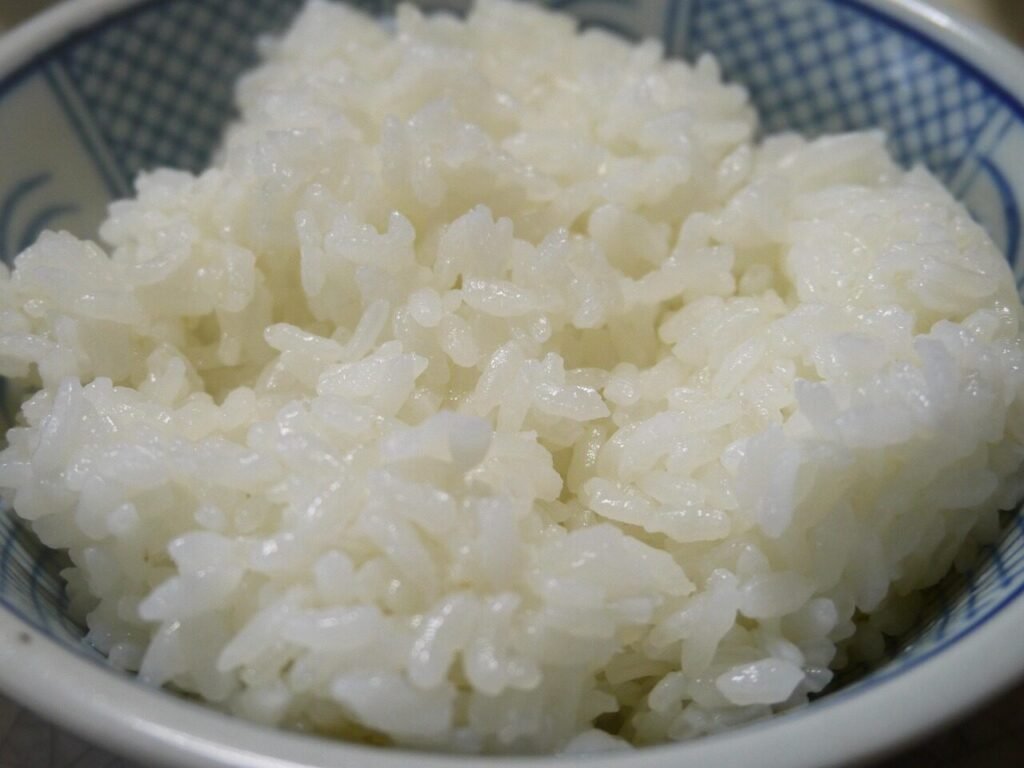
Cooked vs uncooked: why white rice calories seem to change
Dry rice is far more calorie-dense than cooked rice because it has not absorbed water yet, so the per-100 g number on a bag of dry grains looks much higher. Uncooked long-grain white rice has about 365 calories per 100 g, and one cup of dry grains (185 g) holds about 675 calories.
Cooking does not add or remove energy. The grains simply soak up water, so 100 g of dry rice turns into roughly 280 g of cooked rice. The total calories stay the same; they are just spread across more weight.
This is where most logging mistakes happen. Choose the cooked entry when you weigh rice from the pot and the dry entry when you weigh grains before cooking. Mixing the two is one of the biggest sources of tracking errors. Our guide on how to track calories covers weighing tips in more detail.
White rice calories by type of rice
Different white rices land close together per 100 g, but a cup can weigh more or less depending on how the grains pack. Short and medium grains are stickier and heavier per cup, so the same scoop carries more energy.
| Rice type (cooked) | Calories per 100 g | Cup weight | Calories per cup |
|---|---|---|---|
| Long-grain white, enriched | 130 | 158 g | 205 |
| Medium-grain white | 130 | 186 g | 242 |
| Short-grain white | 130 | 186 g | 242 |
| Parboiled long-grain | 123 | 158 g | 194 |
| Instant white, prepared | 124 | 165 g | 205 |
| Glutinous (sticky) rice | 97 | 174 g | 169 |
| Steamed rice, Chinese restaurant | 151 | 132 g | 199 |
| Fried rice, restaurant, no meat | 174 | 137 g | 238 |
Jasmine and basmati are both long-grain types. USDA SR Legacy does not list them separately, so the long-grain values are the closest match.
Restaurant fried rice has the highest white rice calories here because oil goes into the pan, raising fat to about 3 g per 100 g. A lighter home version like our mushroom fried rice uses brown rice, more vegetables and a measured amount of oil.
White rice vs brown rice and other grains
Many people assume brown rice beats white rice calories by a wide margin, but per cup it is actually a little higher. The real differences are fiber and how full a portion keeps you.
| Grain or swap (cooked, 1 cup) | Calories | Protein | Fiber |
|---|---|---|---|
| White rice, long-grain | 205 | 4.3 g | 0.6 g |
| Brown rice, long-grain | 248 | 5.5 g | 3.2 g |
| Brown rice, medium-grain | 218 | 4.5 g | 3.5 g |
| Wild rice | 166 | 6.5 g | 3.0 g |
| Quinoa | 222 | 8.1 g | 5.2 g |
| Pearled barley | 193 | 3.5 g | 6.0 g |
| Bulgur | 151 | 5.6 g | 8.2 g |
| Couscous | 176 | 6.0 g | 2.2 g |
| Cauliflower rice (frozen, cooked) | 34 | 2.9 g | 4.9 g |
Bulgur and wild rice give you more fiber for fewer calories than white rice. Cauliflower rice is the biggest calorie saver by far, though it has a very different texture. The Dietary Guidelines for Americans suggest making at least half of your grains whole grains, so rotating in brown rice, barley or bulgur is an easy way to do that.
How add-ins change white rice calories
Plain rice is modest. What goes on it or into the pot is where the numbers jump. These values use USDA data for each add-in.
- 1 tbsp butter: about 102 calories, so a cup of buttered rice reaches roughly 307
- 1 tbsp olive oil: about 119 calories
- 1 tbsp low-sodium soy sauce: about 8 calories
- 1/2 cup black beans: about 114 calories, plus 7.6 g protein and 7.5 g fiber
Broth adds little, while coconut milk, cheese and creamy sauces add a lot. When you track, log each add-in on its own line rather than picking a vague “seasoned rice” entry.
7 easy ways to lower white rice calories
You do not need to give up rice to eat lighter. Small, practical changes can cut white rice calories on your plate by a third or more.
- Measure once. Scoop your usual portion into a measuring cup. Many people find their “cup” is closer to two.
- Go half and half. Mix 1/2 cup cooked rice with 1/2 cup cooked cauliflower rice. That bowl comes to about 120 calories instead of 205.
- Bulk with vegetables. Stir in peas, broccoli, spinach or mushrooms so the bowl looks full with less rice.
- Add protein. Pair rice with chicken, tofu, fish or beans. A bowl like our pan seared tofu rice bowl balances rice with protein and vegetables.
- Skip the butter at the table. Season with herbs, lime, garlic, chili flakes or a splash of soy sauce instead.
- Use a smaller bowl. A 1/2 to 3/4 cup portion looks generous in a small bowl and sparse on a large plate.
- Cook a batch and portion it. Pack rice into containers of a set size right after cooking. Our high protein meal prep guide shows how to build balanced boxes.
For whole meals built around a sensible rice portion, try jerk chicken and rice or browse more calorie guides.
Common mistakes when counting white rice calories
- Using the dry entry for cooked rice. This can nearly triple the number you log.
- Eyeballing a cup. Rice piles up quickly. Weighing in grams is the most accurate method.
- Forgetting the fat. Oil in the pot, butter on top and fried rice all add calories that plain rice values do not include.
- Assuming rinsing or cooling removes calories. Rinsing washes away some surface starch, and cooling changes the starch slightly, but neither meaningfully changes what you should log.
- Counting sticky rice like long-grain. Short-grain rice packs more densely, so a cup weighs more.
How to store and reheat cooked rice safely
Batch cooking makes portions easy, but cooked rice should not sit out for long. FoodSafety.gov advises refrigerating leftovers within 2 hours of cooking and eating them within 3 to 4 days. Spread a big batch in a shallow container so it cools quickly.
For longer storage, freeze portioned rice. Reheat leftovers until steaming hot, to 165°F (74°C), which is the reheating temperature FoodSafety.gov lists for leftovers. A splash of water before microwaving keeps the grains soft.
Frequently asked questions
How many white rice calories are in one cup?
A level cup of cooked long-grain white rice (158 g) has about 205 calories, 4.3 g protein and 44.5 g carbs, based on USDA data. Medium and short grains pack more densely, so a cup is closer to 242 calories.
Are white rice calories higher than brown rice?
No. Per cup, cooked long-grain brown rice has about 248 calories versus 205 for white. Brown rice gives you more fiber, which can help a portion feel more filling, but it is not lower in calories.
How many calories are in a half cup of rice?
A half cup of cooked long-grain white rice (79 g) has about 103 calories. It is a sensible side portion next to a protein and a big serving of vegetables.
Does cooling or rinsing reduce white rice calories?
Not in a way that matters for tracking. Rinsing removes some surface starch and cooling changes the starch slightly, but you should log the same cooked-rice values either way.
Sources
- USDA FoodData Central: SR Legacy entries for cooked and raw white rice (long, medium and short grain, parboiled, instant, glutinous, restaurant steamed and fried), brown rice, wild rice, quinoa, barley, bulgur, couscous, cauliflower, butter, olive oil, soy sauce and black beans
- FoodSafety.gov cold food storage chart
- FoodSafety.gov safe minimum internal temperatures
- Dietary Guidelines for Americans
Nutrition information is an estimate based on USDA data and will vary by brand, portion and cooking method. This article is general information, not medical advice.