Quick answer: This lighter tuna salad mixes canned light tuna with nonfat Greek yogurt, 2 tablespoons of reduced-fat mayo, celery, red onion, dill pickles and lemon, then piles it over romaine and cherry tomatoes. Each of 4 bowls has about 163 calories and 22 g protein, and it takes 15 minutes with no cooking.
A good tuna salad is one of the easiest no-cook lunches there is. Open two cans, chop a few crunchy vegetables, stir in a creamy dressing and you have protein for several days.
The catch is the dressing. A classic deli-style bowl leans on a full cup of mayonnaise, which can push one serving past 450 calories before bread or crackers. This version keeps the creamy texture and the tangy pickle bite, but swaps most of the mayo for Greek yogurt.
Table of Contents
Why this tuna salad works for lighter eating
Canned light tuna packed in water is very lean. According to USDA FoodData Central, drained light tuna in water has about 86 calories and 19 g of protein per 100 g, with under 1 g of fat.
That means almost all of the extra calories in a typical bowl come from the binder. Regular mayonnaise has roughly 94 calories per tablespoon, so the cup used in many classic recipes adds about 1,500 calories to the batch.
Here, 170 g of nonfat Greek yogurt adds about 100 calories and 17 g of protein to the whole batch. Two tablespoons of reduced-fat mayo bring roughly 108 more calories and keep the familiar savory flavor.
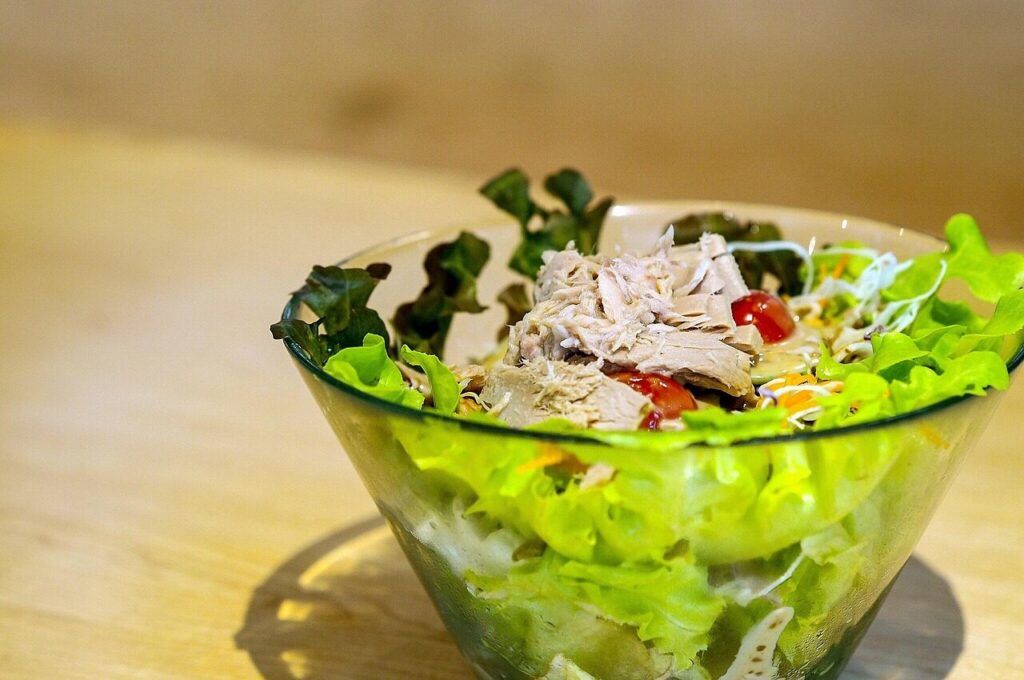
Ingredients for a lighter tuna salad
This makes 4 servings. Weights are given so the nutrition numbers match what you make.
- Canned light tuna in water: 2 cans (about 6.5 oz each), drained well, about 330 g
- Nonfat plain Greek yogurt: 170 g (one small container, about 3/4 cup)
- Reduced-fat mayonnaise: 2 tablespoons (30 g)
- Celery: 1 cup finely diced (about 2 to 3 stalks, 100 g)
- Red onion: about 1/3 cup finely diced (50 g)
- Dill pickles: 1/2 cup diced (70 g)
- Lemon juice: 2 tablespoons, plus a little zest if you like
- Yellow or Dijon mustard: 2 teaspoons
- Fresh dill: 2 tablespoons chopped
- Black pepper: to taste (the pickles and tuna already bring salt)
- To serve: 6 cups chopped romaine (about 280 g) and 2 cups cherry tomatoes (300 g), halved
How to make tuna salad step by step
- Drain the tuna properly. Press the lid into the open can, tip out the water, then flake the fish onto a paper towel for a minute. Dry tuna keeps the yogurt dressing thick instead of runny.
- Mix the dressing first. In a large bowl, whisk the Greek yogurt, mayo, lemon juice, mustard and pepper until smooth. Tasting the dressing before the tuna goes in makes seasoning easier.
- Add the crunch. Stir in the celery, red onion, pickles and dill.
- Fold in the tuna. Use a fork to break the tuna into medium flakes and fold it through gently. Over-mixing turns it into a paste.
- Chill briefly. Cover and refrigerate for 15 to 30 minutes if you have time. The onion mellows and the flavors blend.
- Build the bowls. Divide the romaine and tomatoes between 4 bowls and top each with about 3/4 cup of the tuna mixture.
Tuna salad nutrition per serving
These numbers are calculated from USDA SR Legacy values for every ingredient, including the romaine and tomatoes.
| Per serving (1 of 4) | Amount |
|---|---|
| Calories | about 163 |
| Protein | 22.5 g |
| Carbohydrates | 9.8 g |
| Fat | 4.5 g |
| Fiber | 3.3 g |
| Sodium | about 480 mg |
The mixture on its own, without the greens and tomatoes, comes to about 137 calories and 21 g protein per portion. That is handy if you plan to use it in a sandwich or wrap instead.
Where the calories come from
| Ingredient (whole batch) | Calories |
|---|---|
| Light tuna, 330 g | 284 |
| Reduced-fat mayo, 2 tbsp | 108 |
| Nonfat Greek yogurt, 170 g | 100 |
| Romaine and cherry tomatoes | 102 |
| Celery, onion, pickles, lemon, mustard, dill | 57 |
Lighter tuna salad vs the classic deli version
A traditional batch made with 2 cans of tuna, 1 cup of regular mayonnaise, celery, onion and pickles works out to roughly 470 calories and 42 g of fat per quarter of the bowl. That is before any bread.
The lighter mix above lands near 137 calories and 4 g of fat per portion with slightly more protein, because the yogurt adds some of its own. You save about 330 calories per serving and still get a creamy texture.
If you want it closer to the original taste, use 3 tablespoons of reduced-fat mayo and 120 g of yogurt. Each extra tablespoon of reduced-fat mayo adds about 14 calories per serving.
Choosing your canned tuna
The FDA advice about eating fish lists canned light tuna among its “Best Choices” and albacore (white) tuna among its “Good Choices”, which it suggests eating less often. That is worth knowing if tuna is a regular lunch for you or your family.
Calories shift a little with the type of tuna:
- Light tuna in water: about 86 calories per 100 g drained, the leanest option and the one used here
- White (albacore) tuna in water: about 128 calories per 100 g drained, firmer and milder
- Tuna packed in oil: noticeably higher, even after draining, so keep it for when you want a richer bowl
No-salt-added cans are a simple way to cut sodium. The pickles and mustard still give plenty of flavor.
Easy swaps and variations
- Mediterranean: swap pickles for chopped cucumber, a few olives and a squeeze of extra lemon.
- Spicy: stir in 1 teaspoon of sriracha or a pinch of chili flakes.
- Extra protein: add 2 chopped hard-boiled eggs; each large egg adds about 72 calories (see our egg calories guide).
- Higher fiber: fold in 1/2 cup of rinsed white beans, like the base of our white bean salad.
- No yogurt: use 4 tablespoons of low-calorie mayo instead of the yogurt and mayo mix.
- Different fish: canned or leftover cooked salmon works the same way; our salmon salad has the details.
Common mistakes to avoid
- Skipping the drain. Wet tuna waters down the dressing and makes the bowl soggy by day two.
- Salting too early. Taste after mixing. Canned tuna and pickles often provide all the salt you need.
- Mashing the fish. Fold gently so you get real flakes, not spread.
- Dressing the greens ahead. Store the mixture and the lettuce separately so the romaine stays crisp.
Serving ideas for tuna salad
Spoon it into romaine or butter lettuce leaves for wraps, stuff it into a halved bell pepper, or serve it with cucumber rounds for scooping. For a heartier lunch, one slice of whole-grain toast or a small whole-wheat pita adds roughly 70 to 170 calories depending on the bread.
It also fits nicely into a weekly plan. See our high-protein meal prep guide for how to batch several lunches at once, or browse more ideas in our soups and salads recipes.
Storing tuna salad safely
Tuna salad made with mayonnaise or yogurt is perishable. FoodSafety.gov’s cold food storage chart lists homemade tuna salad at 3 to 5 days in the refrigerator at 40°F or below and notes that these salads do not freeze well.
Don’t leave it out for more than 2 hours, or 1 hour when it is above 90°F, as advised in FoodSafety.gov’s guidance on the 2-hour rule. For packed lunches, use an insulated bag with an ice pack.
Keep the greens and tomatoes in a separate container and assemble just before eating.
Frequently asked questions
How many calories are in this tuna salad?
Each of the 4 bowls has about 163 calories, 22.5 g protein and 4.5 g fat, including the romaine and cherry tomatoes. The tuna mixture alone is about 137 calories per portion.
Can I make tuna salad without mayonnaise?
Yes. Use all Greek yogurt (about 200 g for the batch) with an extra squeeze of lemon and a little more mustard. It will be tangier and slightly lower in calories.
How long does homemade tuna salad last in the fridge?
FoodSafety.gov lists 3 to 5 days in the refrigerator at 40°F or below. Keep it covered, store the greens separately and don’t freeze it.
Which canned tuna is best for a lighter salad?
Light tuna packed in water is the leanest at about 86 calories per 100 g drained. The FDA also lists canned light tuna among its Best Choices for fish.
Sources
- USDA FoodData Central: SR Legacy values for canned light and white tuna, Greek yogurt, reduced-fat and regular mayonnaise, vegetables, pickles, mustard and lemon juice.
- FDA: Advice about eating fish: Best Choices and Good Choices lists.
- FoodSafety.gov: Cold food storage charts: storage times for tuna and other prepared salads.
- FoodSafety.gov: 4 steps to food safety: the 2-hour rule for perishable food.
Nutrition per serving is an estimate calculated from USDA data and will vary with brands and portion sizes. This article is general information, not medical advice.
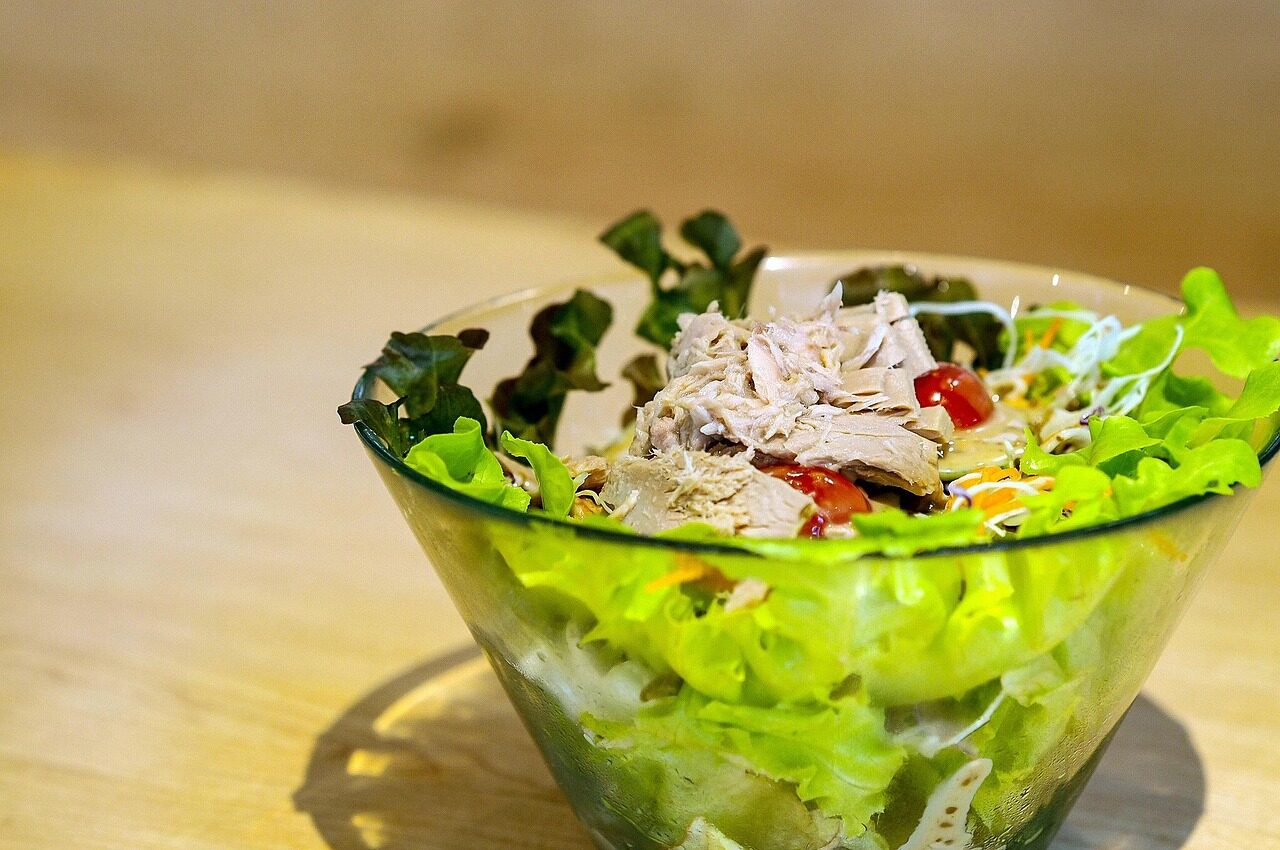
Tuna Salad: Lighter 163-Calorie Bowl with 22 g Protein and No Cooking
Ingredients
Method
- Drain the tuna well, then flake it onto a paper towel for a minute so it is as dry as possible.
- In a large bowl, whisk the Greek yogurt, mayonnaise, lemon juice, mustard and pepper until smooth.
- Stir in the celery, red onion, pickles and dill.
- Add the tuna and fold gently with a fork, keeping some flakes intact.
- Cover and chill for 15 to 30 minutes if time allows.
- Divide the romaine and cherry tomatoes between 4 bowls and top each with about 3/4 cup of the tuna mixture. Refrigerate leftovers within 2 hours and eat within 3 to 5 days.