Quick answer: A low calorie mayo is any spread that gives you creaminess for roughly 15 to 40 calories a tablespoon instead of the 94 in a tablespoon of regular mayonnaise. Light jars from the store land near 36 calories a tablespoon, and simple swaps like Greek yogurt or mashed avocado go lower still.
Table of Contents
What counts as low calorie mayo
There is no legal definition of low calorie mayo, so the phrase gets used for three very different products. Knowing which one of them is in your hand changes the number on your plate more than any other choice in the sandwich.
Full-fat mayonnaise is mostly oil, and it is the benchmark every lighter version is measured against. USDA FoodData Central lists regular mayonnaise at 680 calories per 100 g, which works out to about 94 calories and 10.3 g of fat in one tablespoon (13.8 g). Nothing is wrong with that, but it adds up fast: three tablespoons in a bowl of tuna salad is close to 280 calories before the tuna.
Light mayonnaise is the jar most people mean by low calorie mayo. It replaces part of the oil with water and starch. The USDA entry for light mayonnaise comes to about 36 calories and 3.3 g of fat per tablespoon (15 g), which saves roughly 58 calories for the same spoonful.
Mayonnaise-type dressing, the tangy sweet style sold in a similar jar, also qualifies as a low calorie mayo at about 37 calories a tablespoon, but it carries more added sugar (around 1.5 g) and a sharper flavor that does not suit every recipe.
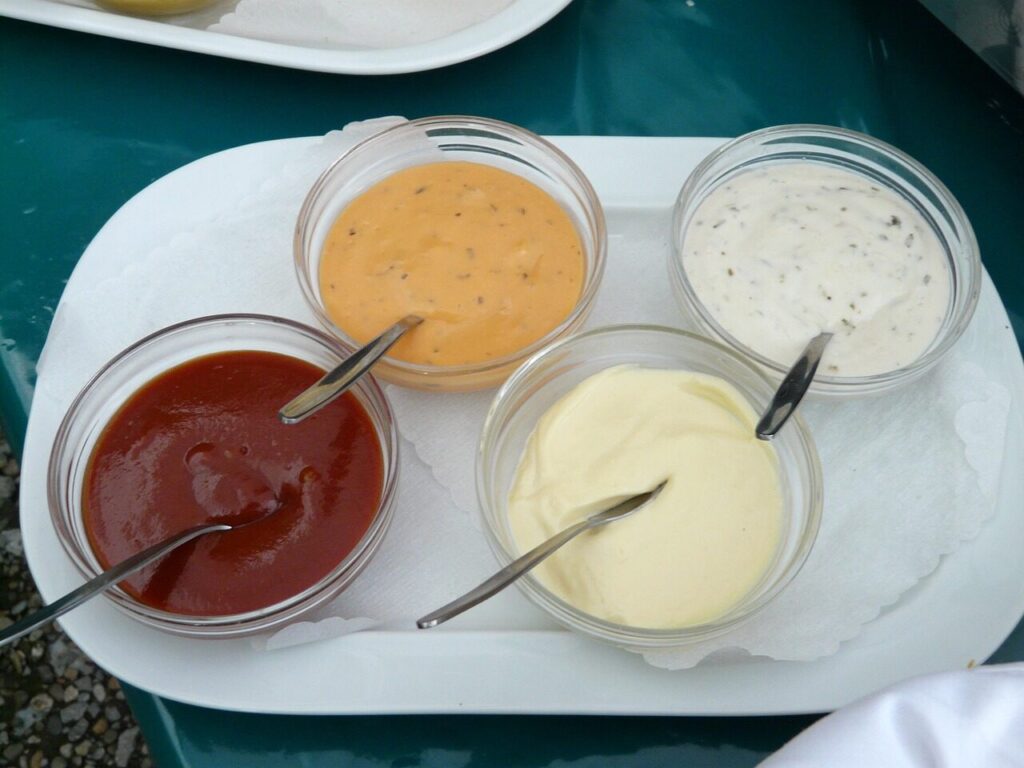
Low calorie mayo calories compared
Here is how every lighter option stacks up against the full-fat jar. All values come from USDA FoodData Central and are rounded to the nearest whole calorie.
| Spread (1 tbsp) | Calories | Fat | Protein | Sodium |
|---|---|---|---|---|
| Regular mayonnaise (13.8 g) | 94 | 10.3 g | 0.1 g | 88 mg |
| Light mayonnaise (15 g) | 36 | 3.3 g | 0.1 g | 124 mg |
| Mayonnaise-type dressing (14.7 g) | 37 | 3.2 g | 0.1 g | 96 mg |
| Reduced-fat sour cream (15 g) | 20 | 1.8 g | 0.4 g | 13 mg |
| Hummus (15 g) | 36 | 2.7 g | 1.2 g | 64 mg |
| Mashed avocado (15 g) | 25 | 2.3 g | 0.3 g | 1 mg |
| Nonfat Greek yogurt (15 g) | 9 | 0.1 g | 1.5 g | 5 mg |
| Yellow mustard (15 g) | 9 | 0.5 g | 0.6 g | 166 mg |
Two things jump out. The gap between regular and light mayonnaise is bigger than the gap between light mayonnaise and most whole-food swaps, so switching jars does most of the work. Mustard and yogurt are the only options under 10 calories, and they also change the flavor most.
How to spot a light jar on the shelf
Front-of-jar wording is not regulated the way the nutrition panel is, so turn the jar around. Three lines tell you everything.
- Serving size. Most mayonnaise panels use one tablespoon (about 14 to 15 g), but a few use 2 teaspoons. If the serving looks small, double-check before you compare.
- Calories and fat. A genuine low calorie mayo sits between 15 and 45 calories a tablespoon. Anything at 70 calories or more is a full-fat product with a lighter-sounding name, whatever the front of the jar says.
- Oil and sugar order. An avocado-oil or olive-oil jar is still mostly oil, so it is just as calorie-dense as the plain version. Reduced-fat jars often add sugar or starch to rebuild the texture, which is worth knowing.
One more thing worth checking: sodium. Lighter jars often carry more salt than the full-fat version, because salt does some of the flavor work the fat used to do. The Dietary Guidelines for Americans suggest keeping sodium under 2,300 mg a day, and a few tablespoons of dressing can take a real bite out of that.
6 easy mayo swaps that save calories
You do not need a special jar at all. Each of these works straight from the fridge with no cooking, and the calories are per tablespoon, from USDA data.
- Nonfat Greek yogurt: 9 calories. The best all-purpose swap. It brings 1.5 g of protein per tablespoon and the thick texture holds up in chicken or egg salad. Add a squeeze of lemon to mimic the tang of mayonnaise.
- Yellow mustard: 9 calories. Unbeatable on sandwiches and burgers, and almost free in calorie terms. It is salty, so use a teaspoon (3 calories) rather than a full spoonful if you are watching sodium.
- Reduced-fat sour cream: 20 calories. Milder than yogurt and closer to mayonnaise in mouthfeel, and a gentle first step if you do not like the yogurt swap.
- Mashed avocado: 25 calories. Rich, creamy and a source of fiber at 1 g a tablespoon. See our avocado calories guide for how quickly half a fruit adds up.
- Hummus: 36 calories. Same calories as light mayonnaise but with protein and fiber attached. Excellent in wraps and on roast-vegetable sandwiches.
- Blended low-fat cottage cheese: 11 calories a tablespoon. Blitz it smooth first or the texture turns grainy. Our cottage cheese calories page has the full numbers per cup.
Mix your own low calorie mayo spread
If you want a low calorie mayo that behaves like mayonnaise rather than a substitute for it, blend the two. Here is a mix that holds together well and keeps for a few days.
Stir together 2 tbsp light mayonnaise (30 g), 6 tbsp nonfat Greek yogurt (90 g), 2 tsp yellow mustard (10 g), a squeeze of lemon juice and a pinch of garlic powder. That makes about 130 g, or eight tablespoons.
| Per 1 tbsp (16 g) | Amount |
|---|---|
| Calories | 16 |
| Protein | 1.2 g |
| Carbohydrate | 0.8 g |
| Fat | 0.9 g |
| Fiber | 0.1 g |
| Sodium | 49 mg |
That is 16 calories where regular mayonnaise would be 94, and the whole batch comes to 131 calories with nearly 10 g of protein. It spreads on bread, binds a tuna salad and thins into a dressing with a spoonful of water.
Where the swap works, and where it does not
A low calorie mayo is not a drop-in replacement everywhere.
Works well: sandwiches, wraps, burgers, coleslaw, potato salad, tuna and chicken salad, dips for raw vegetables, and anything you dress just before eating.
Needs care: potato or pasta salad that sits out at a party, because yogurt-based spreads thin as they sit. Dress those within an hour of serving.
Does not work: anything heated. Light mayonnaise and yogurt both split when they get hot, so mayonnaise-topped baked fish or the classic mayonnaise-in-the-cake trick needs the full-fat jar. Use less of it instead of swapping it out.
Food safety and storage
Egg-based spreads need the fridge, and so do the salads you make with them. Keep an opened jar at 40°F (4°C) or below, use a clean spoon rather than the knife you just used on the sandwich, and follow the FoodSafety.gov cold food storage chart, which gives egg, chicken and tuna salad three to four days in the refrigerator.
Homemade spreads made with yogurt last about as long as the yogurt itself, so check the date on the tub. Do not leave a dressed salad at room temperature for more than two hours.
Three mistakes that undo the saving
- Eyeballing the spoon. A heaped tablespoon of mayonnaise is closer to two level ones. Measuring once or twice retrains your hand.
- Swapping the jar but doubling the amount. Two tablespoons of low calorie mayo is 72 calories, which is most of the way back to where you started.
- Forgetting the rest of the plate. The spread is rarely the main event. Our guides to egg calories and filling low calorie snacks are usually the bigger lever.
Frequently asked questions
Is low calorie mayo actually healthy?
A low calorie mayo is lower in calories and fat than regular mayonnaise, which helps if you are watching either, but healthy depends on the whole plate. Light jars often carry more sodium and a little added sugar than the full-fat version, so read the panel. A spoonful of nonfat Greek yogurt or mashed avocado gives you protein or fiber alongside the creaminess, which a light jar does not.
How many calories are in low calorie mayo per tablespoon?
Store-bought low calorie mayo is about 36 calories per tablespoon (15 g) and mayonnaise-type dressing about 37, against 94 calories for regular mayonnaise, according to USDA FoodData Central. Home swaps go lower: 25 calories for mashed avocado, 20 for reduced-fat sour cream and 9 for nonfat Greek yogurt or yellow mustard.
Can I cook or bake with light mayonnaise?
Not reliably. Light mayonnaise and yogurt-based spreads contain more water and less oil, so they separate and go watery when heated. For mayonnaise-crusted fish, grilled cheese or the mayonnaise-in-cake trick, use a smaller amount of the full-fat jar rather than swapping in a lighter one.
What is the best mayo swap for tuna salad?
A half-and-half mix of light mayonnaise and nonfat Greek yogurt, with a teaspoon of mustard for tang. It holds together like mayonnaise, adds protein, and comes to about 16 calories a tablespoon instead of 94. Keep it refrigerated and eat it within three to four days.
Sources
- USDA FoodData Central, SR Legacy entries for mayonnaise (regular, light and mayonnaise-type dressing), nonfat Greek yogurt, avocado, yellow mustard, hummus, reduced-fat sour cream and 1% cottage cheese.
- FoodSafety.gov cold food storage charts, refrigerator times for egg, chicken and tuna salad.
- Dietary Guidelines for Americans, daily sodium guidance.
Nutrition information is an estimate. This article is general information, not medical advice.