Quick answer: This lighter salmon salad has about 316 calories, 35 g protein and 14 g fat per bowl. You bake two salmon fillets, flake them over romaine, cucumber and cherry tomatoes, then spoon over a lemon, dill and Greek yogurt dressing.
A good salmon salad should feel like a proper meal, not a side dish with a few flakes of fish on top. This version puts a full fillet on each plate, keeps the oil to two teaspoons for the whole recipe, and swaps a heavy creamy dressing for a tangy yogurt one packed with fresh herbs.
It takes about 30 minutes from start to finish, and most of that is the oven doing the work while you chop.
Table of Contents
Why this salmon salad works for lighter eating
Salmon brings protein and naturally rich flavour, so the rest of the bowl can stay simple. Crisp vegetables add volume and crunch for very few calories, which helps a modest portion look and feel generous.
The dressing is where most restaurant salads go wrong. A ladle of ranch or Caesar can add more calories than the fish itself. Here, plain nonfat Greek yogurt does the creamy job, while lemon juice, garlic, dill and a little mustard give it a bright, sharp taste.
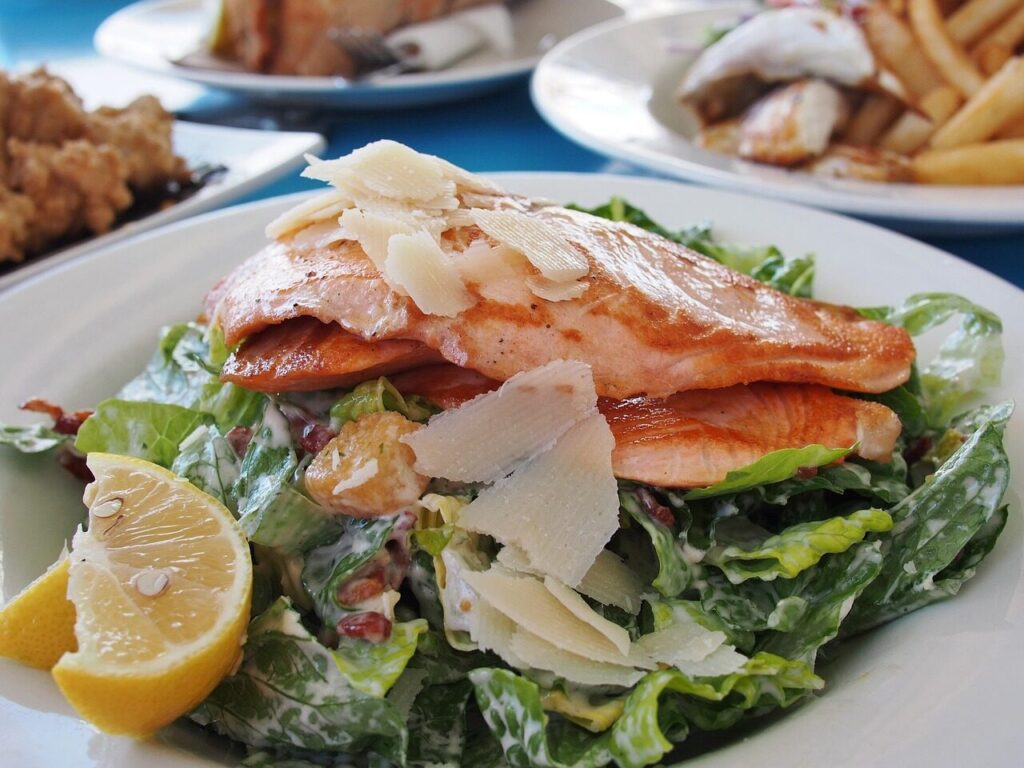
A few things that make it easy to fit into your week:
- One pan, one bowl. The salmon bakes on a lined tray and the dressing is stirred together in a small bowl.
- Measured oil. One teaspoon brushes the fish and one teaspoon goes into the dressing, so nothing is poured by eye.
- Seafood made simple. The Dietary Guidelines for Americans include seafood as part of a healthy eating pattern, and one fillet per bowl is an easy way to add it.
- Flexible base. Any sturdy lettuce works, and leftover cooked salmon turns it into a 10-minute lunch.
Ingredients for a lighter salmon salad
This makes 2 large bowls. Weights are raw, before cooking, because that is how the nutrition below was worked out.
| Ingredient | Amount | Why it is here |
|---|---|---|
| Wild Atlantic salmon fillets | 280 g (two 140 g pieces) | Main protein |
| Romaine lettuce | 150 g (about 3 cups shredded) | Crunchy, low-calorie base |
| Cucumber, with peel | 150 g (about half a large one) | Freshness and water content |
| Cherry tomatoes | 150 g (about 1 cup) | Colour and a little sweetness |
| Red onion | 30 g (a thin wedge) | Bite |
| Olive oil | 2 teaspoons (9 g) | Salmon and dressing |
| Plain nonfat Greek yogurt | 85 g (about 1/3 cup) | Creamy dressing base |
| Lemon juice | 2 tablespoons (30 g) | Acidity |
| Garlic | 1 small clove | Flavour |
| Fresh dill and parsley | 4 g dill, 8 g parsley | Herby lift |
| Yellow or Dijon mustard | 1 teaspoon | Tang and helps the dressing emulsify |
Salt and black pepper are to taste and are not included in the numbers.
How to make salmon salad step by step
The full printable card with times is at the bottom of the page, but here is the method with a little more detail.
- Heat the oven. Set it to 400°F (200°C) and line a small tray with parchment.
- Season the salmon. Pat the fillets dry, brush them with 1 teaspoon of olive oil and season with salt, pepper and a pinch of chopped dill.
- Bake. Cook for 12 to 15 minutes, until the thickest part reaches 145°F (63°C) on an instant-read thermometer and flakes easily with a fork.
- Make the dressing. While the fish bakes, stir the yogurt, lemon juice, grated garlic, mustard, the remaining teaspoon of oil and most of the herbs. Loosen with a spoon of water if it is very thick.
- Prep the vegetables. Shred the romaine, slice the cucumber into half-moons, halve the tomatoes and slice the onion as thinly as you can.
- Build the bowls. Divide the vegetables between two bowls, top each with a fillet (whole or flaked), spoon over the dressing and finish with the rest of the herbs.
Let the salmon rest for two or three minutes before flaking. It holds together better and stays juicier.
Salmon salad nutrition per serving
These values come from USDA FoodData Central (SR Legacy) entries for each raw ingredient, added up and divided by two.
| Per bowl | Amount |
|---|---|
| Calories | 316 |
| Protein | 34.8 g |
| Carbohydrates | 13.1 g |
| Fat | 14.2 g |
| Fiber | 3.5 g |
| Sodium (before added salt) | 120 mg |
About 199 of those calories come from the salmon and roughly 40 from the olive oil. The vegetables, yogurt and herbs together add less than 80. If you want to compare fish portions, our guide to salmon calories breaks down raw and cooked weights by type.
Easy swaps and variations
You can change a lot without losing the point of the dish. A few ideas, with how they shift the numbers:
- Farmed salmon: It is usually a little higher in fat than wild fish, so expect a few more calories per fillet.
- Canned salmon: Drain it well and flake it straight onto the greens. It is a handy pantry option for a work lunch.
- Add grains: Half a cup of cooked quinoa or brown rice per bowl turns it into a heartier dinner, adding roughly 100 to 120 calories.
- Skip the yogurt: Whisk lemon juice, mustard and one teaspoon of olive oil into a quick vinaigrette instead.
- Different greens: Spinach, rocket or mixed baby leaves all work. Mix in shredded cabbage for extra crunch.
- More crunch: A tablespoon of toasted seeds per bowl adds texture, along with about 50 calories.
If you like creamy dressings, our low calorie mayo options also make a nice base when thinned with lemon.
Common mistakes to avoid
Overcooking the fish. Salmon goes from silky to dry quickly. Start checking at 12 minutes and use a thermometer rather than guessing.
Dressing too early. Romaine and cucumber release water once dressed. Toss just before eating, or keep the dressing on the side.
Drowning the bowl. The dressing here is thick and flavourful, so a few spoonfuls go a long way. Taste before adding more.
Skipping the acid. Lemon is what makes the whole salmon salad taste fresh. If it seems flat, a squeeze more juice usually fixes it before salt does.
Make ahead, storage and food safety
Cooked salmon keeps in a sealed container in the fridge for 3 to 4 days. Store the dressing and the chopped vegetables separately, then assemble each bowl when you are ready to eat.
Chill leftovers within two hours of cooking, and don’t leave a dressed bowl out at room temperature for longer than that. The FoodSafety.gov safe minimum temperature chart lists 145°F (63°C) for fish, which is the target used in this recipe.
Cold salmon is lovely in this bowl, so there is no need to reheat it. If you prefer it warm, heat it gently in a covered dish so it does not dry out.
What to serve with a salmon salad
The bowl is filling on its own, but it pairs well with lighter sides. A small bowl of Japanese cucumber salad adds a sweet-sour contrast, or try a cup of soup on cooler days.
For more fish ideas, our salmon skewers with zucchini are great on the grill. You can browse every bowl and soup on our soups and salads page, or find more mains under lighter dinner recipes.
Frequently asked questions
How many calories are in this salmon salad?
One bowl has about 316 calories, 35 g protein, 13 g carbohydrates and 14 g fat, based on USDA values for the raw ingredients. Adding grains, avocado or seeds will raise that number.
Can I make salmon salad with canned salmon?
Yes. Drain a can well, flake it over the greens and use the same dressing. It is a quick, budget-friendly way to make the bowl without turning on the oven.
How do I know when the salmon is cooked?
Check the thickest part with an instant-read thermometer. FoodSafety.gov lists 145°F (63°C) for fish, and the flesh should flake easily with a fork.
How long does salmon salad keep in the fridge?
Cooked salmon keeps for 3 to 4 days in a sealed container. Store the dressing and vegetables separately and assemble each bowl just before eating so the greens stay crisp.
Sources
- USDA FoodData Central (SR Legacy entries for wild Atlantic salmon, romaine, cucumber, tomatoes, onion, olive oil, nonfat Greek yogurt, lemon juice, garlic, dill, parsley and yellow mustard)
- FoodSafety.gov: Safe Minimum Internal Temperatures
- Dietary Guidelines for Americans
Nutrition per serving is an estimate based on USDA data for the ingredients listed and will vary with the brands and exact weights you use. This article is general information, not medical advice.
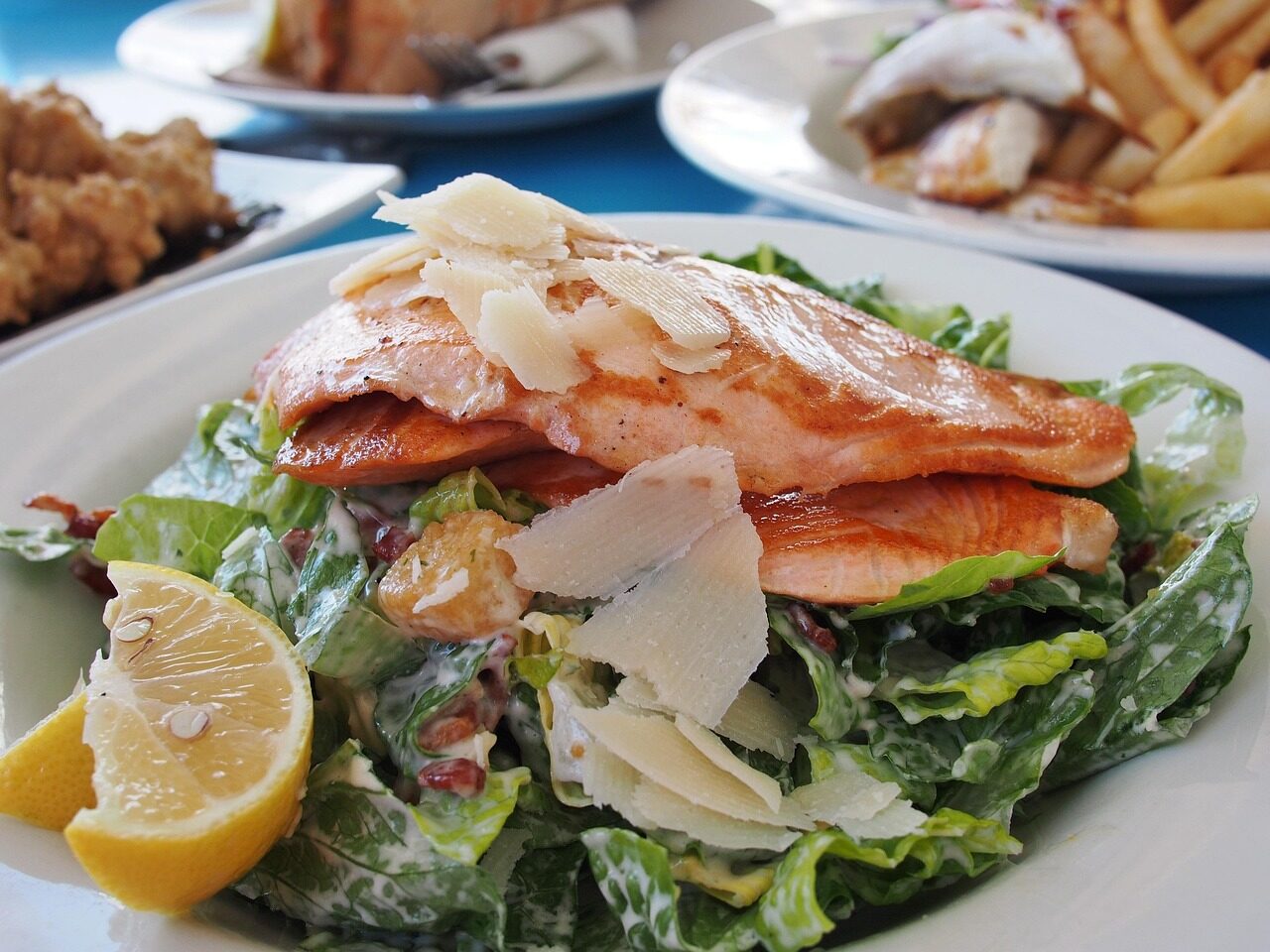
Salmon Salad: Lighter 316-Calorie Bowl with 35 g Protein
Ingredients
Method
- Heat the oven to 400°F (200°C) and line a small tray with parchment.
- Pat the salmon dry, brush with 1 teaspoon of olive oil and season with salt, pepper and a little dill.
- Bake for 12 to 15 minutes, until the thickest part reaches 145°F (63°C) and flakes easily.
- Stir the yogurt, lemon juice, garlic, mustard, remaining oil and most of the herbs into a dressing; thin with a spoon of water if needed.
- Shred the romaine, slice the cucumber and onion and halve the tomatoes.
- Divide the vegetables between two bowls, top each with a salmon fillet, spoon over the dressing and finish with the remaining herbs.