Quick answer: This lighter shrimp pad thai has 488 calories and 36.5 g protein per bowl. It uses 6 oz of rice noodles for four people, stretches them with zucchini ribbons, and keeps the oil, sugar and peanuts measured.
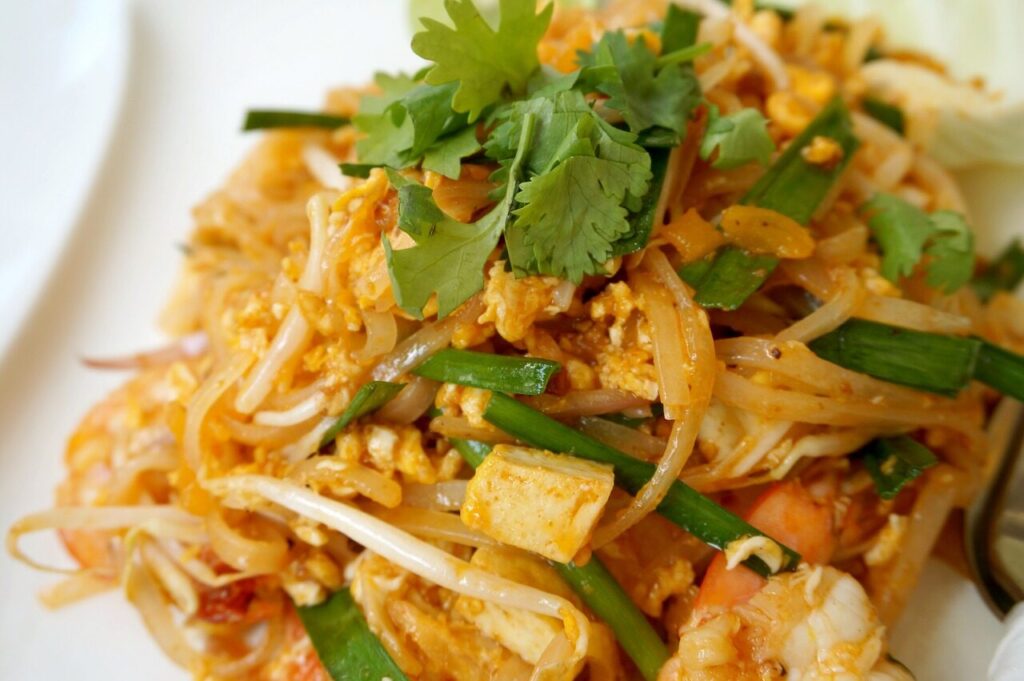
This shrimp pad thai keeps the parts people love: chewy rice noodles, a sweet-sour tamarind sauce, a bit of egg, crunchy sprouts and peanuts on top. The difference is in the amounts. A smaller portion of noodles shares the pan with zucchini, so every bowl still looks full.
You get a big plate of noodles in about 30 minutes, with enough protein to keep you full until morning.
Table of Contents
Why this shrimp pad thai is lighter
Takeout noodle dishes are easy to overdo because the calories hide in places you can’t see. Oil goes into the wok, sugar into the sauce, and peanuts get scattered on with a generous hand. None of those are bad foods. They just add up fast.
This version changes four things:
- Fewer noodles, more volume. 170 g (6 oz) of dry rice noodles serves four, and 2 medium zucchini cut into ribbons fill the gap.
- Measured oil. 1 1/2 tablespoons of peanut oil is enough for a nonstick or well-seasoned pan.
- Less sugar. One tablespoon of brown sugar balances the tamarind and lime without turning the sauce into syrup.
- Peanuts as a garnish. A quarter cup, chopped, gives crunch on every forkful.
In a shrimp pad thai, the shrimp does the heavy lifting on protein. One pound of raw peeled shrimp brings about 91 g of protein to the pan for only 386 calories, based on USDA data.
Ingredients you need
The shrimp pad thai ingredient list is short once you group it by job. Most of it lives in the produce aisle.
For the noodles and stir-fry
- 170 g (6 oz) dry flat rice noodles, about 1/4 inch wide
- 2 medium zucchini (about 390 g), cut into long ribbons or spirals
- 1 lb (454 g) raw shrimp, peeled and deveined
- 3 large eggs
- 1 1/2 tbsp peanut oil, divided
- 3 cloves garlic, minced
- 1 red bell pepper, thinly sliced
- 2 cups fresh bean sprouts
- 4 green onions, cut into 2-inch pieces
For the sauce
- 30 g seedless tamarind pulp (about 1/4 cup) soaked in 1/3 cup hot water
- 2 tbsp fish sauce
- 2 tbsp fresh lime juice
- 1 tbsp packed brown sugar
- 1 tsp sriracha, or to taste
To finish
- 1/4 cup dry-roasted unsalted peanuts, chopped
- A small handful of cilantro
- Lime wedges
If you can only find tamarind concentrate in a jar, start with 1 tablespoon. It is much stronger than the pulp, so taste before adding more.
How to make shrimp pad thai
Read through the steps once before you make shrimp pad thai. Stir-frying moves quickly, so have everything chopped and the sauce mixed before the pan gets hot.
- Soak the noodles. Cover the rice noodles with very hot tap water and soak for 8 to 10 minutes, until they bend easily but still have a firm core. Drain and rinse with cold water so they don’t stick.
- Make the tamarind water. Mash the soaked tamarind with a fork, then press it through a sieve. Stir the strained liquid with the fish sauce, lime juice, brown sugar and sriracha.
- Cook the shrimp. Heat 1/2 tablespoon of oil in a large skillet or wok over medium-high heat. Add the shrimp in one layer and cook 1 to 2 minutes per side, until the flesh is pearly and opaque. Move them to a plate.
- Scramble the eggs. Add another 1/2 tablespoon of oil, pour in the beaten eggs and stir gently until just set. Push them to the side.
- Cook the vegetables. Add the last of the oil, then the garlic and bell pepper. Stir for 1 minute. Add the zucchini and cook 1 to 2 minutes, just until it softens at the edges.
- Toss with sauce. Add the drained noodles and pour in the sauce. Toss with tongs for 2 to 3 minutes, until the noodles soak up most of the liquid.
- Finish. Return the shrimp, add the bean sprouts and green onions, and toss for 30 seconds. Serve topped with peanuts, cilantro and lime wedges.
Food safety notes
Shrimp is done when the flesh turns pearly and opaque, which is the guide FoodSafety.gov gives for shellfish. Egg dishes should reach 160°F. When reheating leftovers, bring them to 165°F.
Shrimp pad thai nutrition per serving
These shrimp pad thai numbers are calculated from every ingredient using USDA FoodData Central (SR Legacy) values. The recipe makes 4 servings of about 420 g each.
| Nutrient | Per serving |
|---|---|
| Calories | 488 |
| Protein | 36.5 g |
| Carbohydrates | 55.4 g |
| Fat | 14.5 g |
| Saturated fat | 3.0 g |
| Fiber | 4.9 g |
| Sugars | 13.8 g |
| Sodium | 1,026 mg |
Where do the calories come from? Here is the split per bowl:
| Part of the dish | Calories | Protein |
|---|---|---|
| Rice noodles (42 g dry) | 155 | 2.5 g |
| Shrimp (113 g raw) | 97 | 22.8 g |
| Eggs (3/4 egg) | 54 | 4.7 g |
| Peanuts (1 tbsp) | 53 | 2.2 g |
| Peanut oil (1 1/8 tsp) | 44 | 0 g |
| Sauce | 38 | 0.7 g |
| Vegetables and zucchini | 48 | 3.5 g |
The noodles are still the biggest single item, which is why the zucchini swap matters.
About the sodium
Fish sauce is very salty, and it supplies most of the 1,026 mg of sodium per bowl. That is close to half of the 2,300 mg Daily Value the FDA uses on food labels. To bring it down, use 1 1/2 tablespoons of fish sauce and add an extra squeeze of lime for brightness.
Lighter vs heavier homemade versions
To show what the swaps do, here is the same shrimp pad thai made the heavier way: 8 oz of noodles and no zucchini, 3 tablespoons of oil, 1/2 cup of peanuts, 3 tablespoons of sugar and 3 tablespoons of fish sauce.
| Version | Calories | Protein | Fat | Sodium |
|---|---|---|---|---|
| This lighter recipe | 488 | 36.5 g | 14.5 g | 1,026 mg |
| Heavier homemade style | 650 | 38.6 g | 23.9 g | 1,400 mg |
That’s about 160 calories saved per bowl, with almost the same protein. Cooking it at home gives you the most control.
Easy swaps and add-ins
This shrimp pad thai is flexible. Here are swaps that work well:
- Chicken instead of shrimp. Use 1 lb of thinly sliced chicken breast and cook it to 165°F.
- Tofu for a meatless bowl. Press and cube 14 oz of extra-firm tofu and brown it first. Use soy sauce in place of fish sauce.
- All noodles, no zucchini. Use 8 oz of noodles if you prefer the classic texture. Expect roughly 35 more calories per bowl.
- More vegetables. Shredded carrots, cabbage or snap peas add crunch and very few calories.
- More heat. Add chili flakes at the table so everyone can choose their level.
For another lighter takeout-style dinner, try our mushroom fried rice or this hot and sour soup.
Common mistakes to avoid
A few small habits make the difference between a sticky clump and a glossy plate of shrimp pad thai.
- Over-soaking the noodles. They keep cooking in the pan. Pull them while they still have a little bite.
- Crowding the shrimp. Too many at once steam instead of searing. Cook in two batches if your pan is small.
- Adding all the sauce at once to a cold pan. Keep the heat at medium-high so the sauce reduces and clings.
- Cooking the zucchini too long. It turns watery. One to two minutes is enough.
- Skipping the rinse. Cold water washes off loose starch so the noodles stay separate.
Storing shrimp pad thai and meal prep
Cool leftover shrimp pad thai quickly and refrigerate it within 2 hours. Store it in a covered container for up to 3 days. Reheat in a skillet with a splash of water, or in the microwave, until it reaches 165°F.
For meal prep, cook the noodles a little firmer than usual and keep the bean sprouts, peanuts and cilantro in a separate container. Add them after reheating so they stay crisp. Our high protein meal prep guide has more ideas for packing lunches.
Serving ideas
Keep the shrimp pad thai as the star and add something fresh on the side:
- A simple cucumber salad with rice vinegar
- Steamed broccoli or bok choy with a squeeze of lime
- A cup of clear broth soup to start
Browse more lighter ideas in our dinner recipes, or see how rice compares in our white rice calories guide.
Frequently asked questions
How many calories are in shrimp pad thai?
This lighter shrimp pad thai has 488 calories per bowl, with 36.5 g protein, 55.4 g carbs and 14.5 g fat. The total depends mostly on how many noodles, how much oil and how many peanuts you use.
Is shrimp pad thai healthy?
It can fit well into a balanced meal plan. Shrimp adds lean protein, and the vegetables add fiber. Watch the sodium from fish sauce and keep the oil, sugar and peanuts measured.
Can I make it without tamarind?
Yes. Mix 2 tablespoons of lime juice with 1 teaspoon of rice vinegar and a little extra brown sugar. The flavor is less deep, but it still tastes bright and balanced.
How long does shrimp pad thai keep in the fridge?
Refrigerate leftovers within 2 hours and eat them within 3 days. Reheat until steaming hot (165°F) and add fresh sprouts and peanuts after reheating.
Sources
- USDA FoodData Central (SR Legacy): rice noodles, shrimp, eggs, peanuts, fish sauce, tamarind, vegetables and oil
- FoodSafety.gov: Safe minimum internal temperatures
- FDA: Sodium in your diet
Nutrition per serving is an estimate based on USDA data and the exact amounts listed. This article is general information, not medical advice.
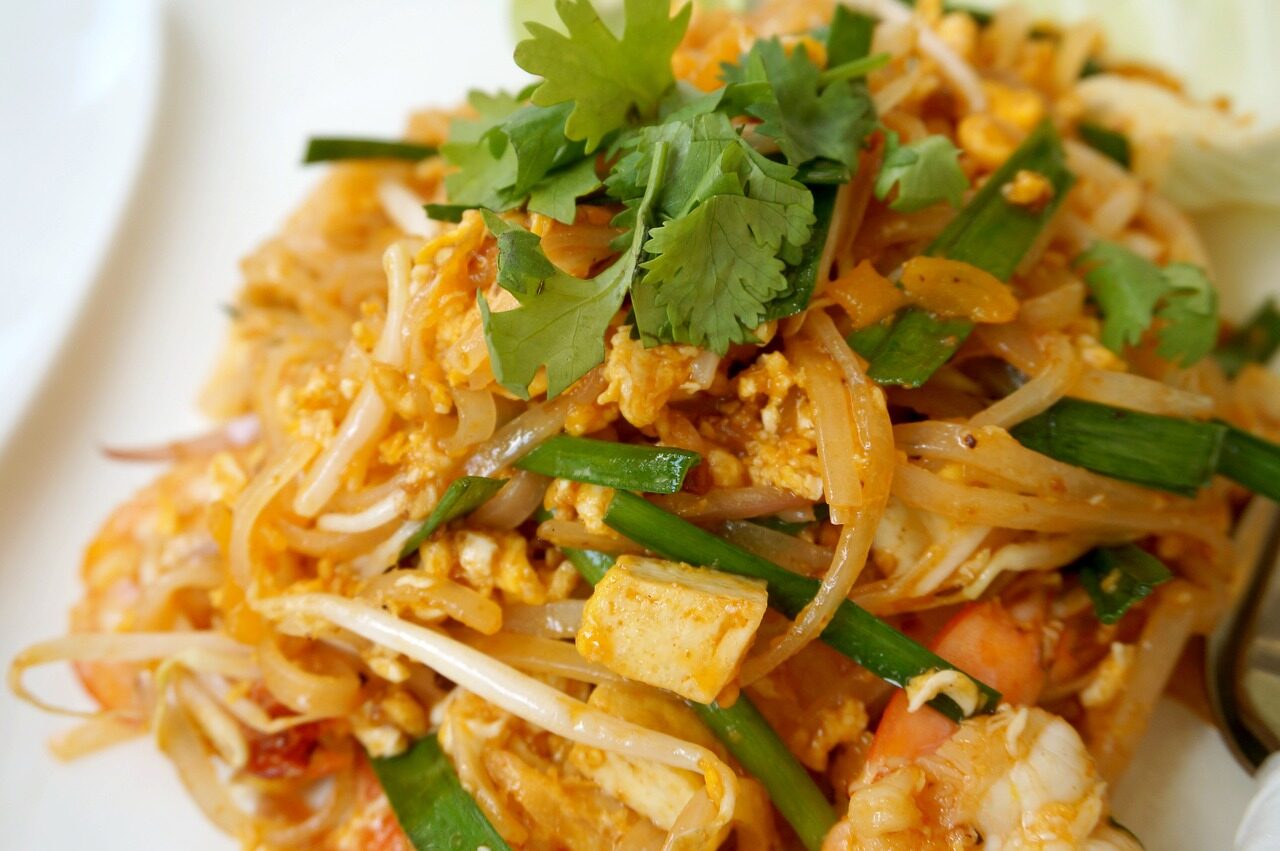
Shrimp Pad Thai: Lighter 488-Calorie Bowl with 37 g Protein
Ingredients
Method
- Soak the rice noodles in very hot tap water for 8 to 10 minutes, until bendable but still firm in the center. Drain and rinse with cold water.
- Mash the soaked tamarind, press it through a sieve and stir the liquid with the fish sauce, lime juice, brown sugar and sriracha.
- Heat 1/2 tbsp oil in a large skillet or wok over medium-high heat. Cook the shrimp in one layer for 1 to 2 minutes per side, until pearly and opaque. Set aside.
- Add another 1/2 tbsp oil and scramble the eggs until just set. Push them to the side.
- Add the remaining oil, garlic and bell pepper and stir for 1 minute. Add the zucchini and cook 1 to 2 minutes.
- Add the noodles and sauce and toss for 2 to 3 minutes, until the noodles absorb most of the liquid.
- Return the shrimp, add bean sprouts and green onions, toss for 30 seconds and serve with peanuts, cilantro and lime wedges.