Quick answer: Milk calories range from about 83 per cup for skim to 149 per cup for whole milk. Reduced-fat (2%) milk has about 122 calories and 1% has about 102, and all four give roughly 8 g of protein per cup. Unsweetened almond milk is the lowest at about 39 calories, but it has only 1 g of protein.
Milk calories come down to one thing: fat. Whole, 2%, 1% and skim milk share almost the same protein, carbohydrate and natural sugar. As the fat drops, so do the calories. Plant milks follow different rules, so we compare them separately below. Every figure here comes from USDA FoodData Central and is worked out per 1-cup (8 fl oz) serving.
Table of Contents
Milk calories per cup: whole vs 2% vs 1% vs skim
This table covers plain cow’s milk with added vitamins, the kind most people keep in the fridge.
| Milk (1 cup) | Weight | Calories | Protein | Fat | Carbs | Sugars |
|---|---|---|---|---|---|---|
| Whole (3.25%) | 244 g | 149 | 7.7 g | 7.9 g | 11.7 g | 12.3 g |
| Reduced-fat (2%) | 244 g | 122 | 8.1 g | 4.8 g | 11.7 g | 12.3 g |
| Low-fat (1%) | 244 g | 102 | 8.2 g | 2.4 g | 12.2 g | 12.7 g |
| Skim (nonfat) | 245 g | 83 | 8.3 g | 0.2 g | 12.2 g | 12.5 g |
Moving from whole to skim saves about 66 calories per cup. If you drink two cups a day, that is roughly 130 calories, with no loss of protein. The sugars listed are lactose, the sugar that occurs naturally in milk, not added sugar.
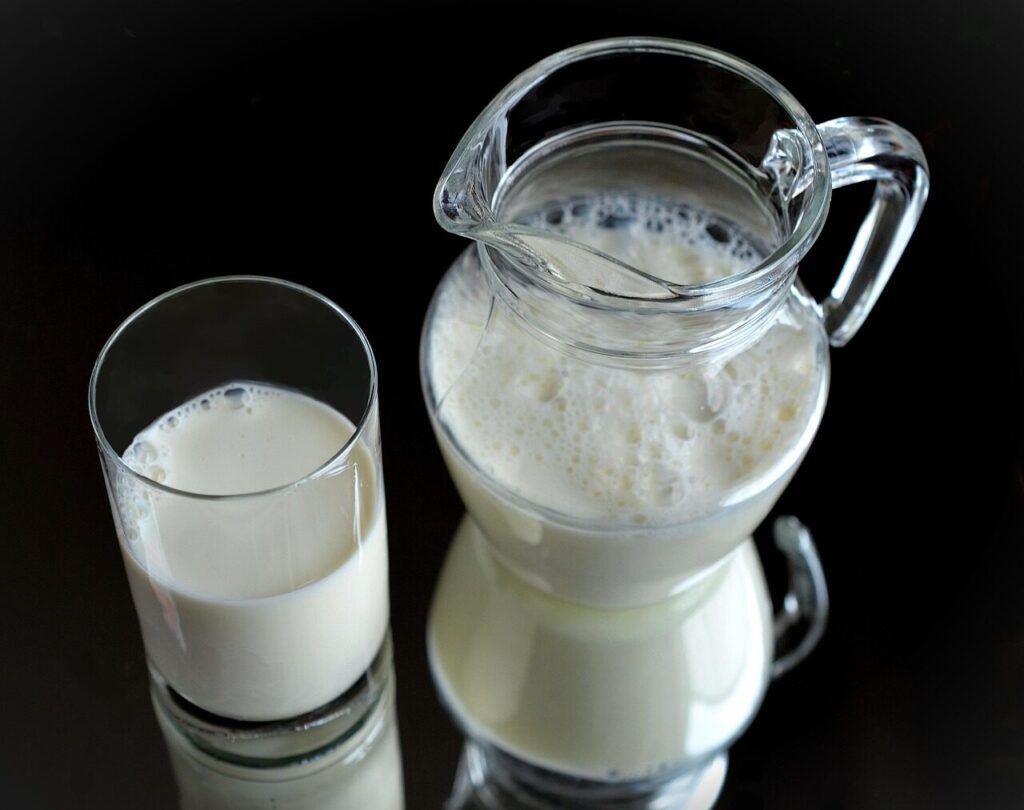
Why milk calories change with fat
Fat carries 9 calories per gram, while protein and carbohydrate carry 4. Whole milk gets almost half of its calories from fat (about 48%). In 2% milk the share is about 36%, in 1% it is about 21%, and in skim milk it is close to zero.
The carbohydrate and protein stay steady because they live in the watery part of milk, not the cream. That is why skim milk tastes a little sweeter to some people: there is less fat to round off the lactose.
Plant milk calories compared
Plant drinks vary far more than dairy. Some are much lower in calories, but several also have far less protein. Always check whether the carton says “unsweetened.”
| Drink (1 cup) | Calories | Protein | Fat | Carbs | Sugars |
|---|---|---|---|---|---|
| Almond milk, unsweetened | 39 | 1.0 g | 2.5 g | 3.4 g | 2.1 g |
| Coconut milk beverage, sweetened | 74 | 0.5 g | 5.0 g | 7.0 g | 6.0 g |
| Soy milk, original, fortified | 104 | 6.3 g | 3.6 g | 12.0 g | 8.9 g |
| Rice milk, unsweetened | 113 | 0.7 g | 2.3 g | 22.0 g | 12.7 g |
| Soy milk, original, unfortified | 131 | 7.9 g | 4.3 g | 15.3 g | 9.7 g |
Soy milk is the only plant option here that comes close to dairy for protein. Oat milk is not part of the USDA dataset we use, and brands differ a lot, so read the Nutrition Facts label on your carton.
Other dairy milks
| Drink (1 cup) | Calories | Protein | Fat | Sugars |
|---|---|---|---|---|
| Low-fat buttermilk | 98 | 8.1 g | 2.6 g | 13.1 g |
| Goat milk | 168 | 8.7 g | 10.1 g | 10.9 g |
| Reduced-fat chocolate milk | 190 | 7.5 g | 4.8 g | 23.9 g |
Chocolate milk has about 68 more calories than plain 2% milk, mostly from added sugar. A half-cup glass is an easy way to enjoy it while keeping the number down.
Milk calories in small servings
Most of us do not drink a full measured cup every time. Use these numbers for coffee, cereal and recipes.
| Serving | Whole | 2% | 1% | Skim |
|---|---|---|---|---|
| 1 tablespoon (15 g) | 9 | 8 | 6 | 5 |
| 1/2 cup | 74 | 61 | 51 | 42 |
| 1 cup | 149 | 122 | 102 | 83 |
| 12 fl oz (1 1/2 cups) | 223 | 183 | 154 | 124 |
For comparison, a tablespoon of half-and-half has about 20 calories. A splash in black coffee stays small, but a large latte made with whole milk can reach 200 calories or more.
Milk calories in everyday breakfasts
Here is how the choice of milk changes a few common breakfasts. Oats are 40 g dry (about 1/2 cup), which USDA lists at about 152 calories.
| Breakfast | With whole milk | With skim milk | Difference |
|---|---|---|---|
| Oats cooked in 1 cup milk | 301 | 235 | 66 |
| Cereal with 3/4 cup milk (milk only) | 112 | 62 | 50 |
| 12 fl oz latte (milk only) | 223 | 124 | 99 |
| Smoothie with 1 cup milk (milk only) | 149 | 83 | 66 |
Cooking oats in half milk and half water is a handy middle ground. You keep the creamy texture and about half the extra calories.
Which milk should you choose?
There is no single best milk. It depends on what you want from it.
- Lowest calories with protein: skim or 1% milk.
- Creamier taste for fewer calories than whole: 2% milk.
- Dairy-free with protein: fortified soy milk.
- Lowest calories overall: unsweetened almond milk, if you get protein elsewhere.
The Dietary Guidelines for Americans group fat-free and low-fat dairy milk with fortified soy milk, because both supply protein, calcium and vitamin D. If you drink almond, rice or coconut beverages, choose versions fortified with calcium and vitamin D.
Protein per 100 calories
If you want the most protein for the fewest calories, skim milk wins clearly.
- Skim milk: 9.9 g protein per 100 calories
- 1% milk: 8.0 g per 100 calories
- 2% milk: 6.6 g per 100 calories
- Whole milk: 5.2 g per 100 calories
Pairing milk with other high-protein breakfast foods is easy. See our guides to egg calories and fluffy cottage cheese pancakes.
Easy ways to keep milk calories in check
- Step down slowly. Going straight from whole to skim can taste thin. Try 2% for a few weeks, then 1%.
- Measure your pour. A cereal bowl often holds more than a cup. Pour into a measuring cup once to see your usual amount.
- Choose unsweetened. Flavored and “original” plant milks often contain added sugar. Unsweetened versions can save 30 to 60 calories a cup.
- Watch your coffee order. Drinks made with whole milk and syrup add up quickly. Ask for skim or a smaller size.
- Use milk where it helps. Blending skim milk into a smoothie or oats adds protein for few calories.
Common mistakes when counting milk calories
- Logging “milk” without the fat level. Tracking apps may default to whole milk. Pick the exact type you buy.
- Ignoring the splash. Three or four splashes a day in coffee or tea can add 30 to 80 calories.
- Assuming all plant milk is light. Rice milk has nearly as many calories as 2% dairy milk and almost no protein.
- Guessing glass size. Many tall glasses hold 12 to 16 fl oz, not 8.
For a simple way to log drinks accurately, see our guide on how to track calories.
How to read a milk label
The Nutrition Facts panel on a carton lists calories for one serving, which is usually 1 cup (240 mL). Check three lines: calories, protein and added sugars. Plain dairy milk should show 0 g of added sugars, because its sugar is lactose. Flavored milks and many plant drinks show added sugars separately.
Ultra-filtered and protein-fortified milks have their own labels. Some contain more protein and less sugar than regular milk, so compare the panel rather than assuming the numbers in this guide apply.
Milk storage and safety
Keep milk in the fridge at 40°F (4°C) or below, and do not leave it out for more than two hours. Use it by the date on the carton, and keep it in the main part of the fridge rather than the door, where the temperature changes more often. The FoodSafety.gov cold food storage chart has more detail.
Frequently asked questions
How many milk calories are in one cup of 2% milk?
One cup of 2% (reduced-fat) milk has about 122 calories, 8.1 g of protein and 4.8 g of fat, based on USDA data.
Which milk has the fewest calories?
Unsweetened almond milk is lowest at about 39 calories per cup. Among dairy milks, skim has the fewest, at about 83 calories per cup.
Do milk calories differ much between skim and whole?
Yes. Whole milk has about 149 calories per cup and skim has about 83, a gap of about 66 calories, while protein stays near 8 g in both.
Is the sugar in plain milk added sugar?
No. The roughly 12 g of sugar in a cup of plain cow’s milk is lactose, which occurs naturally. Flavored milks, such as chocolate milk, also contain added sugar.
Sources
- USDA FoodData Central: milk, whole, 2%, 1% and nonfat; chocolate milk; buttermilk; goat milk; soy, almond, rice and coconut beverages; half-and-half.
- FoodSafety.gov: cold food storage.
- Dietary Guidelines for Americans: dairy and fortified soy alternatives.
Nutrition information in this article is an estimate based on USDA FoodData Central and varies by brand. This article is general information, not medical advice.