Quick answer: On McDonald’s US menu, one hash brown has 140 calories (checked October 21, 2026). A USDA lab analysis of the 53 g patty found about 144 calories, 8.6 g fat, 15 g carbohydrate, 1.3 g protein and 307 mg sodium.
Table of Contents
McDonald’s hash brown calories at a glance
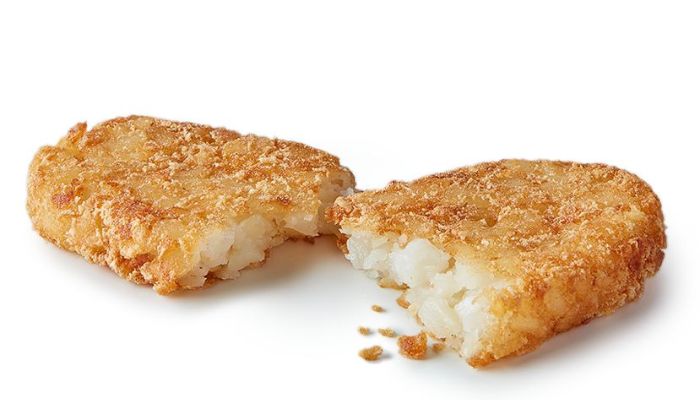
McDonald’s hash brown calories are one of the most searched breakfast numbers, and for good reason: the crispy patty sneaks onto a lot of morning trays. McDonald’s US product page states 140 calories per hash brown. For the rest of the nutrition panel, the most detailed public data is the USDA FoodData Central entry for a McDonald’s hash brown, which comes from a lab analysis of the patty.
| Nutrient (USDA, one 53 g patty) | Amount |
|---|---|
| Calories | 144 |
| Total fat | 8.6 g |
| Saturated fat | 1.2 g |
| Carbohydrate | 15.1 g |
| Fiber | 1.5 g |
| Sugars | 0.3 g |
| Protein | 1.3 g |
| Sodium | 307 mg |
| Potassium | 181 mg |
The two sources for McDonald’s hash brown calories line up closely. Menu numbers are based on standard recipes, while lab samples vary a little from patty to patty, so treat 140 as the working number.
What makes up McDonald’s hash brown calories
Based on the USDA values, here is how McDonald’s hash brown calories break down in one patty:
- Fat: about 78 calories, or roughly 54% of the total. The shredded potato is formed into a patty and fried, and the oil it absorbs supplies most of the energy.
- Carbohydrate: about 61 calories, or roughly 42%. This is almost all potato starch, with very little sugar.
- Protein: about 5 calories, or under 4%.
That split explains why McDonald’s hash brown calories feel satisfying in the moment but don’t keep you full for long. The patty brings fat and starch but almost no protein, and only 1.5 g of fiber.
Calories per gram
Per 100 g, McDonald’s hash brown calories reach 271 in the USDA data, a little less than McDonald’s fries at 323 calories per 100 g. A hash brown is simply a small, fixed portion, which makes it easier to budget than a carton of fries. For more context on everyday foods, see our calories in everyday foods guide.
Hash brown vs other McDonald’s breakfast items
These menu calories were read from McDonald’s US product pages on October 21, 2026.
| McDonald’s US breakfast item | Calories |
|---|---|
| Hash Browns | 140 |
| Egg McMuffin | 310 |
| Sausage Burrito | 310 |
| Sausage McMuffin | 400 |
| Bacon, Egg & Cheese Biscuit | 460 |
| Sausage McMuffin with Egg | 480 |
| Hotcakes | 580 |
At 140, McDonald’s hash brown calories are the lowest on the list, but the patty also has the least protein. Since McDonald’s hash brown calories bring almost no staying power, the side is worth a quick thought before you order two.
Common breakfast combos
- Egg McMuffin Meal: McDonald’s lists 455 calories for an Egg McMuffin, Hash Browns and a small Premium Roast Coffee.
- Sausage McMuffin with Egg plus a hash brown: roughly 620 calories, not counting a drink.
- Bacon, Egg & Cheese Biscuit plus a hash brown: about 600 calories.
- Two hash browns: McDonald’s hash brown calories double to about 280, with very little protein to show for it.
Sodium and fat in a hash brown
Sodium deserves attention alongside McDonald’s hash brown calories. At about 307 mg in the USDA data, one patty supplies roughly 13% of a full day’s 2,300 mg sodium cap, as set out in the Dietary Guidelines for Americans. Breakfast sandwiches carry a lot of salt as well, so a sandwich-and-hash-brown meal can pass 1,000 mg quickly.
Saturated fat is fairly modest at about 1.2 g. Most of the fat in the patty comes from the frying oil rather than the potato itself, so the cooking method matters more than the ingredient.
Hash brown calories outside the US
They do vary. Restaurants in other markets, including Canada, Australia and the UK, use their own recipes, oils and patty sizes, which means McDonald’s hash brown calories change from one country to the next. Everything here reflects the US menu and the USDA sample. For the exact figure where you live, look up the hash brown on your country’s McDonald’s site.
Is a McDonald’s hash brown a good choice?
It can be, as long as you see it for what it is: a deep-fried potato patty. McDonald’s hash brown calories are modest on their own, and 140 fits into most daily budgets without trouble. The weak spots are protein and fiber, which are the two things that help a breakfast last until lunch.
If you often feel hungry by mid-morning, look at the whole tray rather than blaming the hash brown. A protein-rich sandwich, a piece of fruit from home or a plain coffee will do more for your energy than cutting the side alone. Our calorie guides cover other fast-food favourites if you want to compare.
3 best ways to order lighter
- Add a protein-rich sandwich. The Egg McMuffin is 310 calories and brings egg and Canadian bacon, so the meal stays near 450 calories and keeps you fuller.
- Keep the drink simple. Plain black coffee and unsweetened tea add next to nothing. See our coffee calories guide for how milk and syrup change the total.
- Make it the treat, not the base. If you want a bigger sandwich, skip the hash brown that day, or split one.
Common mistakes when counting McDonald’s hash brown calories
- Forgetting the side. People log the sandwich and the coffee but skip McDonald’s hash brown calories entirely, even though the patty adds 140.
- Counting one when you ate two. A second hash brown doubles the side to 280.
- Using another country’s number. Recipes and sizes differ, so match the figure to your local menu.
- Ignoring the drink. A sweet latte or frappé can add more than the hash brown and sandwich combined.
If you track your intake, our guide on how to track calories covers simple ways to log restaurant meals.
An easy homemade air fryer hash brown
You can get a similar crunch at home for a fraction of McDonald’s hash brown calories. Using USDA values for plain frozen shredded hash brown potatoes (82 calories per 100 g) and olive oil, a 53 g homemade patty with half a teaspoon of oil comes to about 63 calories, less than half of the restaurant patty.
- Thaw 1 cup of plain frozen shredded potatoes, or grate a fresh potato.
- Squeeze out as much water as you can in a clean towel.
- Season with salt, pepper and a pinch of onion powder.
- Press into flat oval patties about 1 cm thick.
- Brush or spray lightly with oil.
- Cook in the air fryer for 12 to 15 minutes at 400°F (200°C), turning once, until golden.
Want more crunchy, lighter snacks? Our air fryer recipes collection has plenty, including air fryer apple chips. For a breakfast with more protein, add an egg; our protein in an egg guide has the numbers.
Storing homemade patties
Cool cooked patties, then refrigerate them in a sealed container and eat within 3 to 4 days, as FoodSafety.gov recommends for cooked leftovers. You can also freeze shaped, uncooked patties on a tray, then bag them. Air fry straight from frozen, adding a few minutes.
Frequently asked questions
How many calories are in two McDonald’s hash browns?
Two US hash browns come to about 280 calories. Based on USDA data, that is roughly 17 g fat, 30 g carbohydrate and just over 600 mg sodium.
Are McDonald’s hash brown calories the same in every country?
No. Recipes, oils and patty sizes differ by country, so look at your country’s McDonald’s site. This guide uses the US menu figure of 140.
What is a lower-calorie McDonald’s breakfast with a hash brown?
An Egg McMuffin with a hash brown is about 450 calories and gives you far more protein than the hash brown alone. Add black coffee to keep it there.
Can McDonald’s hash brown calories fit a calorie deficit?
Usually, yes. One patty is 140 calories, a small share of most daily targets. Eating it alongside eggs or another protein, with water or black coffee, makes the meal more filling.
Sources
- McDonald’s US: Hash Browns, checked October 21, 2026. Breakfast item calories from the McDonald’s US product pages for the Egg McMuffin, Egg McMuffin Meal, Sausage McMuffin, Sausage McMuffin with Egg, Bacon, Egg & Cheese Biscuit, Sausage Burrito and Hotcakes, all checked the same day.
- USDA FoodData Central: SR Legacy entries for McDonald’s Hash Brown, McDonald’s french fries, frozen plain hash brown potatoes and olive oil.
- Dietary Guidelines for Americans: sodium limit.
- FoodSafety.gov: Cold Food Storage Chart.
Nutrition information is an estimate; restaurant recipes change over time and vary by country. This article is general information, not medical advice.