Quick answer: This octopus salad tosses tender cooked octopus with cherry tomatoes, sweet yellow pepper, black olives, red onion and a lemon-oregano dressing. Each of 4 servings has about 279 calories, 35 g protein and 8.8 g fat, and it is ready in about 20 minutes if you start with pre-cooked octopus.
Octopus salad is one of those dishes that sounds like a restaurant splurge but is simple to put together at home. Most of the work is slicing vegetables, and a quick sear on the octopus gives you the charred edges you see on a seaside platter.
This lighter octopus salad skips the pile of potatoes and the heavy pour of oil found in many recipes. You still get a big, colorful plate, with more than 35 g of protein for well under 300 calories.
Table of Contents
Why this octopus salad works for lighter eating
Octopus is lean, firm seafood. According to USDA FoodData Central, cooked octopus has about 164 calories, 29.8 g protein and 2.1 g fat per 100 g. That puts it close to cooked chicken breast for protein, with a texture that holds up well in a dressing.
The calories in a seafood salad usually come from what surrounds the main ingredient. In this recipe, the octopus supplies about 185 of the 279 calories per serving. The oil adds 44, and the tomatoes, pepper, onion and olives together add only about 45.
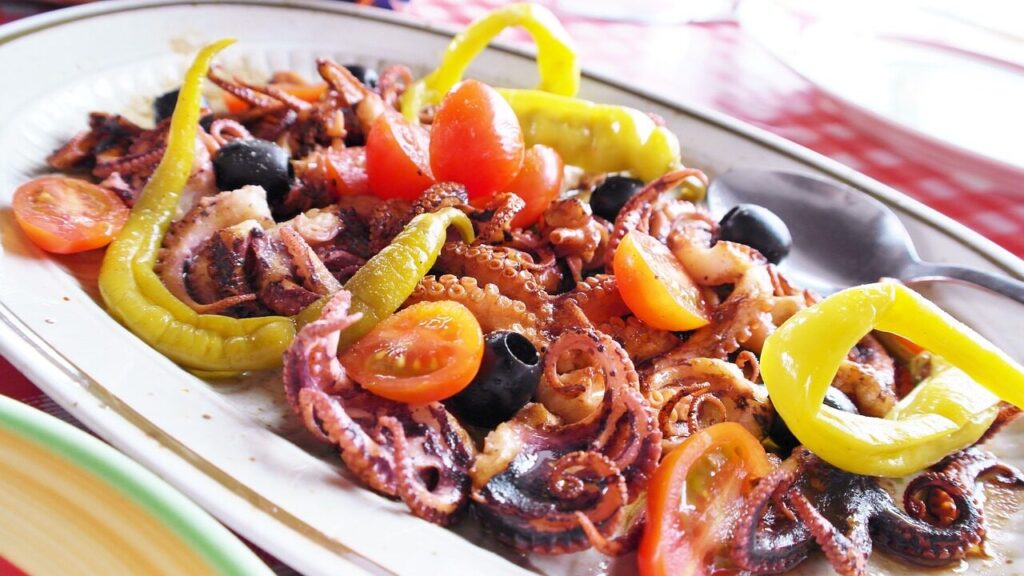
Here is what makes the lighter version different:
- Measured oil. One and a half tablespoons of olive oil dress the whole octopus salad, instead of the three or more tablespoons many recipes use.
- Vegetables for volume. Two cups of cherry tomatoes and a whole yellow pepper make the plate look full without adding much energy.
- Olives as an accent. About nine large olives give a briny bite in every forkful while keeping fat and sodium in check.
- Potatoes are optional. You can add them for a heartier meal, and the numbers for that version are below.
Ingredients for a Mediterranean octopus salad
An octopus salad needs a short list of ingredients, most of them already in a well-stocked kitchen.
| Ingredient | Amount (serves 4) | Why it is there |
|---|---|---|
| Cooked octopus | 450 g (1 lb) | Lean protein and the star of the dish |
| Cherry tomatoes | 300 g (2 cups), halved | Juicy sweetness and color |
| Yellow bell pepper | 1 large (186 g), in strips | Crunch and a mild sweet flavor |
| Black olives | 40 g (about 9 large) | Salty, briny contrast |
| Red onion | 75 g, thinly sliced | Sharp bite that softens in the dressing |
| Garlic | 1 clove, grated | Depth in the dressing |
| Fresh parsley | 15 g, chopped | Fresh, green finish |
| Lemon juice | 2 tbsp | Bright acidity |
| Red wine vinegar | 1 tbsp | Extra tang without calories |
| Extra virgin olive oil | 1 1/2 tbsp | Carries the flavors |
| Dried oregano | 1 tsp | Classic Mediterranean aroma |
Buying octopus: Many fish counters and grocery stores sell octopus tentacles that are already cooked, either chilled or vacuum-packed. That is the easiest route. If you buy raw octopus, plan on roughly 900 g (2 lb) raw to end up with about 450 g cooked. USDA values for raw and cooked octopus suggest it loses about half its weight as it cooks.
How to make octopus salad step by step
- Make the dressing. Whisk the lemon juice, vinegar, grated garlic, oregano and 1 tablespoon of the olive oil in a large bowl. Add a pinch of black pepper. Hold off on salt for now, since the octopus and olives already bring plenty.
- Soften the onion. Add the sliced red onion to the dressing and let it sit while you prepare everything else. The acid takes the harsh edge off.
- Cut the octopus. Slice the tentacles into bite-size pieces about 2 to 3 cm long. Pat them dry with paper towels so they sear instead of steam.
- Sear for color. Heat a nonstick or cast-iron skillet over high heat with the remaining 1 1/2 teaspoons of oil. Add the octopus in a single layer and cook for 3 to 4 minutes, turning once, until the edges are browned and crisp.
- Toss. Add the warm octopus, tomatoes, pepper strips, olives and parsley to the bowl. Fold everything gently so the tomatoes keep their shape.
- Rest and taste. Let the octopus salad sit for 10 to 15 minutes so the octopus absorbs some dressing. Taste, then add a squeeze more lemon or a small pinch of salt only if needed.
If you start with raw octopus, simmer it whole in a pot of gently bubbling water until a thin knife slides easily into the thickest part of a tentacle. This usually takes 45 to 90 minutes depending on size. Cool it, then continue from step 3.
Octopus salad nutrition per serving
These numbers are calculated from USDA SR Legacy values for every ingredient in the recipe, divided into 4 servings of about 285 g each.
| Nutrient | Per serving |
|---|---|
| Calories | 279 |
| Protein | 35.2 g |
| Carbohydrates | 14.3 g |
| Fat | 8.8 g |
| Saturated fat | 1.5 g |
| Fiber | 2.1 g |
| Sodium | about 600 mg |
Sodium is worth a note. Octopus is naturally salty, with about 460 mg per 100 g cooked, so this recipe does not need added salt to taste seasoned. If you watch your sodium, the FDA’s guide to sodium explains how to read labels and spot high-sodium foods.
Lighter vs classic octopus salad
| Version | What changes | Calories per serving |
|---|---|---|
| This recipe | 1 1/2 tbsp oil, 40 g olives, no potatoes | 279 |
| With baby potatoes | Add 340 g boiled baby potatoes | 353 |
| Classic potato style | 450 g potatoes, 3 tbsp oil, 1/2 cup olives | 403 |
Both of the heartier versions are still reasonable meals. The point is to know where the extra calories come from so you can choose the one that fits your day.
Swaps and variations
- Make it a full meal. Turn the octopus salad into a heartier plate with 340 g of boiled baby potatoes, halved. Each serving gains about 74 calories and 17 g of carbohydrate.
- Use pickled peppers. Swap the bell pepper for 120 g of drained pickled hot peppers for more heat. Calories stay about the same, but sodium rises to roughly 1,030 mg per serving.
- Try other seafood. Cooked shrimp or squid rings work with the same dressing. Shrimp is a little lower in protein per 100 g, so adjust portions if you track closely. Our air fryer popcorn shrimp is a fun crunchy option for another night.
- Add greens. Serve the salad over arugula or chopped romaine to stretch it to six lighter portions.
- Add beans. A cup of rinsed white beans adds fiber and makes the plate more filling.
Common mistakes to avoid
Skipping the drying step. Wet octopus will spatter and steam in the pan. A quick pat with paper towels gives you crisp, browned edges in a few minutes.
Searing too long. Pre-cooked octopus only needs color, not more cooking. Several extra minutes over high heat can make it chewy.
Drowning it in oil. With any octopus salad, it is easy to keep pouring olive oil “for flavor.” Each extra tablespoon adds about 119 calories to the bowl, or roughly 30 per serving.
Salting too early. Between the octopus, olives and any pickled peppers, the salad can tip into salty territory. Taste first, season last.
Cutting pieces too large. Thick chunks are hard to eat and do not pick up the dressing. Bite-size pieces mix better with the vegetables.
What to serve with it
This octopus salad is a complete light lunch on its own. For dinner, pair it with something simple:
- A slice of crusty whole-grain bread or a small warm pita
- A crunchy side like our Japanese cucumber salad
- Grilled vegetables such as zucchini or eggplant
- Another seafood main, like our sheet-pan baked cod, for a seafood spread
If you enjoy fish-forward lunches, our salmon salad is another high-protein bowl, and you can browse more ideas in our soups and salads recipes.
Storage and meal prep
Octopus salad keeps well, which makes it handy for planned lunches.
- Fridge: Store leftovers in a covered container and eat them within 3 to 4 days, in line with the cold food storage chart from FoodSafety.gov for cooked seafood.
- Serving out: Do not leave the salad at room temperature for more than 2 hours, or 1 hour if it is above 90°F outside.
- Prep ahead: Cut the vegetables and mix the dressing up to a day early. Sear and toss the octopus just before serving for the best texture.
- Freezing: Not recommended. The tomatoes and peppers turn watery once thawed.
For more make-ahead ideas, see our guide to high-protein meal prep.
Frequently asked questions
How many calories are in this octopus salad?
One serving of this recipe has about 279 calories, 35 g protein, 14 g carbohydrate and 8.8 g fat, based on USDA values for every ingredient. Adding 340 g of boiled baby potatoes to the bowl brings it to about 353 calories per serving.
Can I use frozen octopus for octopus salad?
Yes. Thaw frozen octopus in the refrigerator overnight, then cook it if it is raw or simply pat it dry if it is pre-cooked. Sear the pieces briefly for color before tossing them with the vegetables and dressing.
How long does octopus salad last in the fridge?
Keep it covered in the refrigerator and eat it within 3 to 4 days, which matches FoodSafety.gov guidance for cooked seafood leftovers. Freezing is not recommended because the tomatoes and peppers turn watery.
Is octopus high in protein?
Yes. USDA data lists about 29.8 g of protein per 100 g of cooked octopus with only about 2 g of fat, so it is a lean protein choice. A 112 g portion, as in this recipe, gives roughly 33 g of protein.
Sources
- USDA FoodData Central: SR Legacy entries for cooked and raw octopus, cherry tomatoes, yellow bell pepper, ripe olives, red onion, garlic, parsley, lemon juice, red wine vinegar, olive oil, dried oregano, boiled potatoes and pickled hot peppers.
- FoodSafety.gov cold food storage chart: leftover storage times for cooked seafood.
- FDA: Sodium in your diet: reading labels for sodium.
Nutrition for this octopus salad is an estimate based on USDA data and the exact amounts listed. This article is general information, not medical advice.
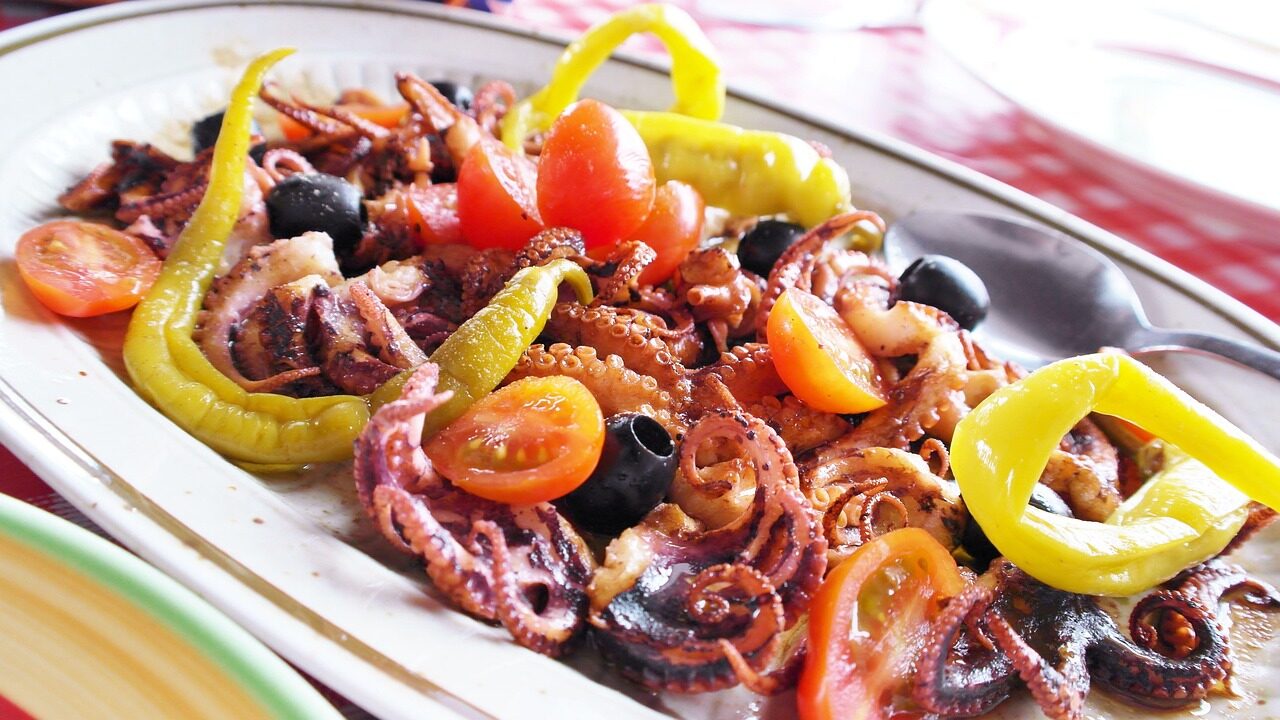
Octopus Salad: Lighter 279-Calorie Mediterranean Bowl with 35 g Protein
Ingredients
Method
- Whisk the lemon juice, vinegar, garlic, oregano, black pepper and 1 tablespoon of the olive oil in a large bowl.
- Add the sliced red onion to the dressing and let it soften while you prepare the rest.
- Cut the octopus into 2 to 3 cm pieces and pat them dry with paper towels.
- Heat a skillet over high heat with the remaining 1 1/2 teaspoons of oil. Sear the octopus in a single layer for 3 to 4 minutes, turning once, until the edges brown.
- Add the octopus, tomatoes, pepper strips, olives and parsley to the bowl and fold gently.
- Rest for 10 to 15 minutes, taste, and add more lemon or a small pinch of salt only if needed.