Quick answer: Glazed donut calories come to about 253 for a medium yeast-raised glazed doughnut (60 g, about 3.25 inches across), with 13.6 g of fat, 28.7 g of carbohydrate, 13.7 g of sugar and 3.7 g of protein. A doughnut hole has about 55 calories, while an extra-large glazed doughnut tops 500.
Glazed donut calories are worth knowing before the box comes out at the office. A single glazed doughnut is not a disaster, but because it is mostly refined flour, sugar and frying fat, it won’t keep you full, and the second one tends to follow the first. All the numbers below come from USDA FoodData Central, so you can compare sizes, styles and other bakery favorites on the same footing.
Table of Contents
Glazed donut nutrition (medium, 60 g)
| Nutrient | Amount |
|---|---|
| Calories | 253 |
| Fat | 13.6 g |
| Saturated fat | 5.7 g |
| Carbohydrate | 28.7 g |
| Sugars | 13.7 g |
| Fiber | 1.3 g |
| Protein | 3.7 g |
| Sodium | 190 mg |
Values are for a yeast-leavened glazed doughnut. Sizes vary between bakeries and chains, so check the brand’s nutrition page for an exact figure. Per 100 g, a glazed doughnut has 421 calories, which makes it one of the more energy-dense foods in the bakery case.
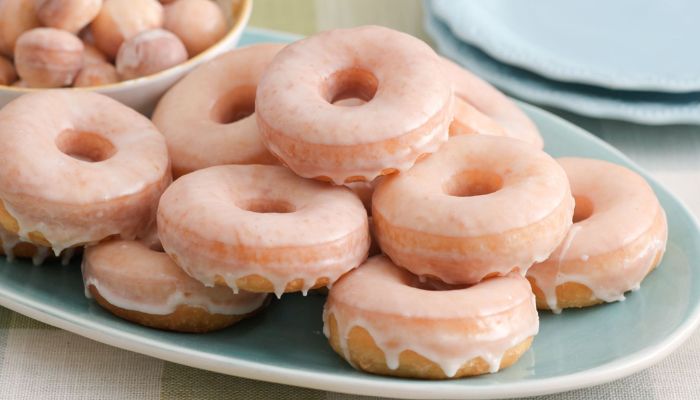
Glazed donut calories by size
Size changes glazed donut calories more than anything else. USDA lists several common portions for yeast-raised glazed doughnuts:
| Size | Weight | Calories |
|---|---|---|
| Doughnut hole | 13 g | 55 |
| Medium ring (about 3.25 in) | 60 g | 253 |
| Doughnut stick | 56 g | 236 |
| Extra large (about 5 in) | 122 g | 514 |
| Jumbo (about 6 in) | 157 g | 661 |
So a jumbo glazed doughnut is roughly the same as two and a half medium ones. If you are choosing from a case of mixed sizes, the smaller ring or a couple of holes is the easy win.
Glazed donut calories vs other doughnuts
| Doughnut type (per 100 g) | Calories | Sugars |
|---|---|---|
| Jelly-filled, yeast | 340 | 21.1 g |
| Creme-filled, yeast | 361 | 14.6 g |
| French cruller, glazed | 412 | 35.1 g |
| Chocolate cake, glazed or sugared | 417 | 31.9 g |
| Glazed, yeast-raised | 421 | 22.8 g |
| Plain cake, glazed or sugared | 426 | not listed |
Per gram, filled doughnuts are slightly lower because the filling contains water. But filled and cake doughnuts are usually heavier than a light, airy yeast-raised ring, so a whole one often has more calories in total.
Per doughnut, not per 100 g
Looking at typical whole doughnuts makes the picture clearer:
- Jelly-filled oval (85 g): about 289 calories and 18 g of sugar.
- Medium glazed cake doughnut (45 g): about 192 calories.
- Medium plain cake doughnut (54 g): about 234 calories.
- French cruller (41 g): about 169 calories.
The cruller is light because it is mostly air, which is why it often comes out lowest per piece even though its sugar per gram is high.
How a doughnut compares to other breakfast pastries
A doughnut is not always the highest-calorie pick at the coffee shop. Here is how a medium glazed doughnut stacks up against other common choices, using USDA portion weights:
| Pastry | Typical size | Calories | Sugars |
|---|---|---|---|
| Butter croissant | medium, 57 g | 231 | 6.4 g |
| Glazed doughnut | medium, 60 g | 253 | 13.7 g |
| Cheese danish | 71 g | 266 | 4.9 g |
| Plain bagel | medium, 105 g | 277 | 8.9 g |
| Frosted cinnamon bun | 65 g | 294 | 16.7 g |
| Blueberry muffin | medium, 113 g | 424 | 35.6 g |
The muffin is the real surprise when you line glazed donut calories up against other pastries. It looks wholesome, yet a medium one has far more calories and more than twice the sugar of a glazed doughnut. A plain bagel has similar calories but much less fat and more protein. See our bagel calories guide for toppings.
Where the calories come from
About half of the glazed donut calories come from fat absorbed during frying, and most of the rest from refined flour and the sugar glaze. There is little fiber or protein. That combination is why a doughnut is satisfying in the moment but doesn’t hold you until lunch.
The glaze itself is mostly sugar. Thicker glazes, chocolate icing, sprinkles and fillings all push the total higher than a plain glazed ring.
Glazed donut calories at home vs the bakery
USDA figures are averages, and real doughnuts vary. Bakery doughnuts are often larger than the 60 g medium used here, and some are glazed twice. Grocery-store packs tend to be smaller rings. The quickest way to estimate glazed donut calories for any doughnut is to weigh it: multiply the weight in grams by 4.2. A 75 g doughnut, for example, comes to about 316 calories.
For chain doughnuts, the brand’s own nutrition page gives the most accurate figure for that exact product, so check it before you order if you’re keeping count.
How to enjoy a doughnut mindfully
- Make it a treat, not breakfast. Enjoy it after a meal that has protein and fiber.
- Choose one and sit down with it. Eating slowly makes one feel like enough.
- Share or halve it. Half a medium glazed doughnut is about 127 calories.
- Pick holes over a jumbo. Two holes are about 110 calories.
- Skip the sweet drink. A plain coffee keeps the total down. See our coffee calories guide.
- Balance the day, not the moment. One doughnut can fit into most eating patterns.
Common mistakes with doughnut calories
- Assuming all glazed donut calories are the same. A jumbo can have more than double the calories of a medium.
- Forgetting the drink. A sweet coffee drink can match the doughnut itself.
- Thinking a muffin is lighter. As the table shows, it usually isn’t.
- Grazing from the box. Put one on a plate and close the lid.
Smart swaps when you want something sweet
- A banana with a spoon of peanut butter: sweet, with fiber and some protein.
- Air fryer apple chips with cinnamon: crunchy and naturally sweet.
- Greek yogurt with berries and a small drizzle of honey.
- A slice of whole-grain toast with a thin layer of jam.
Baking doughnuts at home
Baked doughnuts made in a doughnut pan skip the frying oil, which is where much of the fat comes from. A light glaze of powdered sugar and milk, or a dusting of cinnamon sugar, keeps them sweet without a thick coating. They are still a treat, but a lighter one you can portion yourself.
Doughnuts at the office or a party
Shared boxes make it easy to eat more than you planned, because there is always one more within reach. Decide what you want before you open the lid, put it on a napkin or plate, and step away from the box. Choosing a classic glazed ring or a couple of holes over a filled or frosted one usually keeps the total lower.
If you are the one bringing treats, a mixed box with doughnut holes gives everyone a smaller option, and a bowl of fresh fruit next to it gives people a choice.
Storing doughnuts
Glazed doughnuts are best the day they are made. Keep leftovers in a loosely closed container at room temperature for a day or two. Cream- or custard-filled doughnuts need refrigeration. Plain glazed doughnuts can be frozen, though the glaze may turn sticky after thawing.
For more comparisons, browse our calorie guides.
Frequently asked questions
How many glazed donut calories are in one doughnut?
A medium yeast-raised glazed doughnut of about 60 g has roughly 253 calories. A doughnut hole has about 55 and an extra-large one about 514.
How much sugar is in a glazed doughnut?
About 14 g in a medium glazed doughnut, mostly from the glaze.
Are glazed donut calories higher than a muffin?
Usually not. A medium blueberry muffin has about 424 calories, compared with about 253 for a medium glazed doughnut.
Can a doughnut fit into a balanced diet?
Yes, as an occasional treat. Choosing a smaller size and pairing it with a protein-rich meal helps.
Sources
- USDA FoodData Central: doughnuts, yeast-leavened, glazed, enriched; other doughnut types; butter croissant; cheese danish; plain bagel; frosted cinnamon bun; blueberry muffin.
Nutrition information is an estimate based on averages from USDA FoodData Central and varies by brand, size and preparation. This article is general information, not medical advice.