Quick answer: This Asian chicken salad has about 326 calories and 37 g protein per serving. Shredded napa cabbage, red pepper, cucumber, carrot and mandarin segments get tossed with roasted chicken breast and a sesame-lime dressing, then finished with a small handful of cashews.
An Asian chicken salad is a smart way to turn a few cups of cooked chicken into a crunchy, bright lunch that still feels like a real meal. The trick is a dressing that tastes bold without leaning on a lot of oil or sugar.
This lighter version uses one tablespoon of toasted sesame oil for the whole batch, plus lime juice, rice vinegar, reduced-sodium soy sauce and fresh ginger. You skip the fried wonton strips and get crunch from raw vegetables and toasted cashews instead.
Table of Contents
Why this Asian chicken salad is lighter
Restaurant-style versions often pile on crispy noodles or fried wontons and then pour on a sweet dressing made mostly from oil. Those two parts can easily add more calories than the chicken and vegetables combined.
In this Asian chicken salad, the calories come mostly from protein. Lean roasted breast meat supplies about 33 g of the 37 g protein per bowl, and the vegetables add volume, fiber and water for very few calories. A batch uses:
- About 420 g (3 cups chopped) cooked chicken breast with no skin
- Roughly 750 g of raw vegetables and fruit, so each bowl is big
- Only 13.6 g of oil and 14 g of honey in the full batch of dressing
- One ounce of cashews, split four ways, for crunch
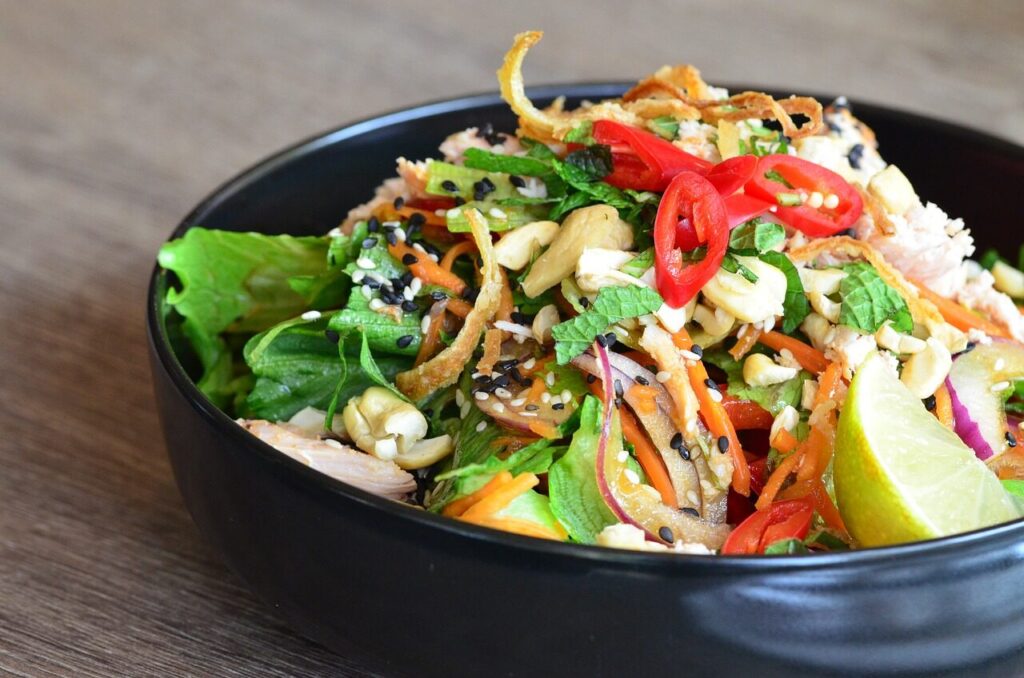
Ingredients for a lighter Asian chicken salad
Everything in this Asian chicken salad is easy to find in a regular grocery store. Weights are given because they make the nutrition numbers accurate.
For the salad (4 servings):
- 420 g cooked chicken breast, skinless, chopped or shredded (leftover, grilled or rotisserie breast meat)
- 300 g napa cabbage, thinly sliced (about 4 cups)
- 1 medium red bell pepper (120 g), cut into thin strips
- 1 small cucumber (150 g), cut into half-moons
- 2 medium carrots (100 g), grated or cut into matchsticks
- 2 mandarins or clementines (176 g), peeled and separated
- 3 scallions (30 g), sliced
- A small handful of cilantro (8 g), chopped
- 28 g (1 oz) dry-roasted unsalted cashews, roughly chopped
For the sesame-lime dressing:
- 3 tbsp fresh lime juice (about 1 lime)
- 2 tbsp unseasoned rice vinegar
- 1 tbsp toasted sesame oil
- 2 tbsp reduced-sodium soy sauce
- 2 tsp honey
- 2 tsp finely grated fresh ginger
- 1/2 tsp red pepper flakes, or to taste
If you want a quick shortcut for the protein, our air fryer chicken breast cooks in about 15 minutes and slices cleanly once it rests.
How to make Asian chicken salad step by step
- Cook or prep the chicken. If you are cooking raw breasts, cook them until the thickest part reaches 165°F (74°C), then let them rest for 5 minutes before chopping. Leftover chicken should be cold from the fridge.
- Whisk the dressing. In a jar, combine lime juice, rice vinegar, sesame oil, soy sauce, honey, ginger and pepper flakes. Shake hard for 20 seconds.
- Toast the cashews. Warm them in a dry skillet over medium heat for 3 to 4 minutes, shaking the pan, until they smell nutty. Let them cool, then chop.
- Slice the vegetables. Cut the cabbage thin so it softens slightly in the dressing. Keep the pepper, cucumber and carrot in similar-sized strips for even bites.
- Toss. For the Asian chicken salad base, put the cabbage, vegetables, scallions and chicken in a large bowl. Pour on about three-quarters of the dressing and toss well.
- Finish. Add the mandarin segments and cilantro, drizzle with the remaining dressing and scatter the cashews on top just before eating.
Asian chicken salad nutrition per serving
These numbers are calculated from USDA FoodData Central (SR Legacy) values for every ingredient, divided into 4 servings. Brand differences in soy sauce and chicken will move them slightly.
| Per serving (1/4 of the recipe) | Amount |
|---|---|
| Calories | 326 |
| Protein | 36.6 g |
| Carbohydrates | 21.3 g |
| Fiber | 3.9 g |
| Sugars | 12.5 g |
| Fat | 11.0 g |
| Saturated fat | 2.3 g |
| Sodium | 364 mg |
Here is where those calories come from in each bowl:
| Part of the bowl | Calories per serving |
|---|---|
| Chicken breast | 173 |
| Vegetables, mandarins and herbs | 62 |
| Cashews | 40 |
| Sesame-lime dressing | 51 |
If you want an even lighter plate, skip the cashews and use half the dressing. That brings a bowl to roughly 260 calories while keeping almost all of the protein.
Asian chicken salad swaps and variations
The base recipe is flexible, so it is easy to adapt to what is in your fridge.
- Different protein: Swap the chicken for cooked shrimp or firm tofu. Our pan seared tofu works well, though the protein per bowl will be lower.
- More crunch, same calories: Add sliced radishes, snap peas or shredded red cabbage in place of some napa cabbage.
- Lower sugar: Leave out the honey and add an extra splash of lime juice. The mandarins still bring sweetness.
- Lower sodium: Use 1 tbsp soy sauce plus 1 tbsp water, then taste and adjust.
- Make it heartier: Serve it over 1/2 cup cooked brown rice or soba noodles. Check our white rice calories guide if you want to compare grain portions.
- Nut-free: Replace cashews with toasted sesame seeds, using about 1 tsp per bowl.
Common mistakes to avoid
Dressing everything too early. In an Asian chicken salad, napa cabbage holds up for a few hours, but cucumber and mandarins release water. For meal prep, keep the dressing separate.
Using too much oil. It is tempting to double the sesame oil because it smells great. One tablespoon is plenty for four bowls, since toasted sesame oil is strongly flavored.
Skipping the acid. Lime juice and rice vinegar carry the flavor here. If the salad tastes flat, it usually needs another squeeze of lime, not more oil or soy sauce.
Cutting chicken into big chunks. Shredded or thinly sliced chicken mixes through the vegetables, so every forkful gets protein. Large cubes tend to sink to the bottom.
Forgetting to taste. The flavor of an Asian chicken salad depends on the dressing, and soy sauce brands vary a lot in saltiness. Taste the dressing before adding it and adjust with lime or water.
Meal prep and storage for Asian chicken salad
This Asian chicken salad is a good make-ahead lunch if you pack it in parts. Divide the chicken and chopped vegetables into four containers, keep the dressing in small jars and store the cashews at room temperature.
According to FoodSafety.gov’s cold food storage chart, cooked chicken leftovers keep for 3 to 4 days in the refrigerator at 40°F (4°C) or below. Don’t leave the salad out for more than 2 hours, or 1 hour on a day above 90°F (32°C).
Add the mandarins and dressing on the day you eat it. The cabbage stays crisp, and the salad tastes just as fresh on day three.
What to serve with it
An Asian chicken salad is filling on its own, but a few easy sides round it out:
- A cup of hot and sour soup for a light takeout-style lunch
- A side of Japanese cucumber salad if you want more vegetables
- Fresh fruit, or one of our filling low-calorie snacks for the afternoon
You can find more lighter salad and soup ideas in our soups and salads recipes.
Frequently asked questions
How many calories are in this Asian chicken salad?
One serving, a quarter of the recipe, has about 326 calories, 36.6 g protein, 21.3 g carbohydrates and 11 g fat, calculated from USDA FoodData Central values. Skipping the cashews and using half the dressing brings it to roughly 260 calories.
Can I make Asian chicken salad ahead for lunches?
Yes. Pack the chicken and chopped vegetables in containers, keep the dressing in a separate jar and add it with the mandarins on the day you eat. Cooked chicken keeps 3 to 4 days in the fridge at 40°F or below.
What can I use instead of sesame oil?
A neutral oil such as canola works, but the dressing will taste milder. Because toasted sesame oil is so strong, you only need one tablespoon for four servings, so swapping it does not change the calories much.
Is this salad high in protein?
Yes. Each bowl has about 37 g protein, mostly from skinless roasted chicken breast. Shrimp or tofu also work, but they usually give less protein per serving than the chicken version.
Sources
- USDA FoodData Central (SR Legacy values for chicken breast, napa cabbage, vegetables, mandarins, cashews, sesame oil, soy sauce, honey and lime juice)
- FoodSafety.gov: Safe minimum internal temperatures
- FoodSafety.gov: Cold food storage charts
Nutrition information is an estimate calculated from USDA data and will vary with brands and portion sizes. This article is general information, not medical advice.
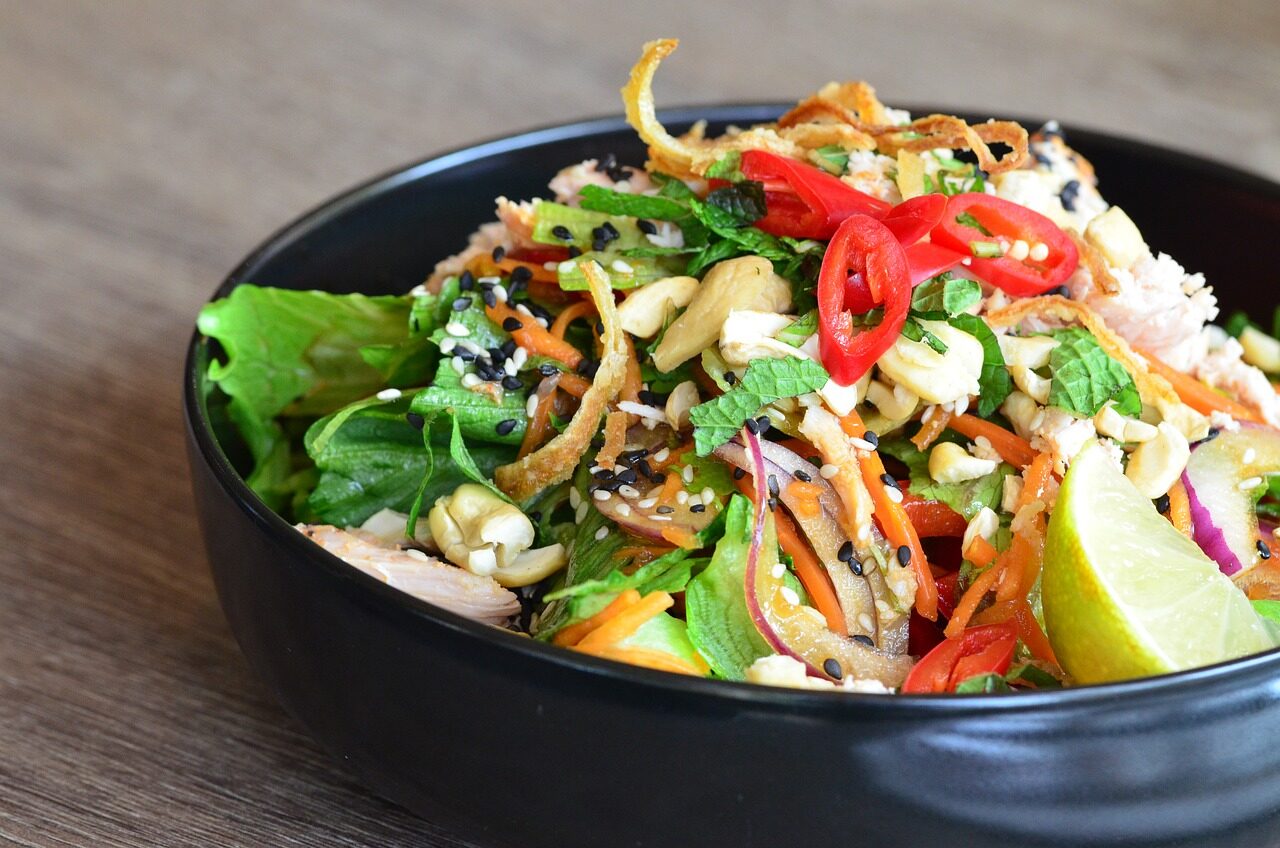
Asian Chicken Salad: Lighter 326-Calorie Bowl with 37 g Protein
Ingredients
Method
- If cooking raw chicken breasts, cook until the thickest part reaches 165°F (74°C), rest 5 minutes, then shred or chop.
- Shake the lime juice, rice vinegar, sesame oil, soy sauce, honey, ginger and pepper flakes in a jar for 20 seconds.
- Toast the cashews in a dry skillet over medium heat for 3 to 4 minutes, shaking the pan, then cool and chop.
- Thinly slice the cabbage and cut the pepper, cucumber and carrots into similar-sized strips.
- Toss the cabbage, vegetables, scallions and chicken with about three-quarters of the dressing.
- Add the mandarins and cilantro, drizzle with the remaining dressing and top with cashews just before serving.