Quick answer: This creamy high protein pasta has 374 calories and 25 g protein per serving. The secret is a sauce of blended cottage cheese and parmesan, tossed with whole wheat ribbons, spinach and peas. No cream and no butter.
This high protein pasta tastes like a bowl of something rich and comforting, but the creamy sauce is made from blended cottage cheese rather than heavy cream. It takes about 25 minutes, uses everyday ingredients and gives you a proper portion of pasta without a heavy feeling afterward.
It is also a vegetarian meal that reaches 25 g of protein per serving without protein powder, special noodles or meat. If you want more, there are easy add-ins below.
Table of Contents
Why this high protein pasta works
A typical cream-based pasta gets most of its calories from fat and very little of its protein from the sauce. This recipe flips that balance.
- Cottage cheese sauce. Half a cup of 1% cottage cheese has about 81 calories and 14 g protein. The same amount of heavy cream has about 405 calories and just 3.4 g protein.
- Parmesan for flavor. A small amount goes a long way, adding savory depth and a little extra protein.
- Whole wheat pasta. It brings more fiber than regular pasta for a similar number of calories.
- Peas and spinach. They add volume, color and a few more grams of protein.
High protein pasta vs a classic cream sauce
To see what the swap really changes, here is this recipe next to a classic creamy pasta made with the same amount of regular pasta, 1 cup of heavy cream, 2 tbsp butter and the same parmesan. Both are per serving, out of 4, from USDA data.
| Per serving | Classic cream pasta | This high protein pasta |
|---|---|---|
| Calories | 521 | 374 |
| Protein | 12.9 g | 25 g |
| Fat | 31.6 g | 8.6 g |
| Fiber | 2 g | 7.7 g |
You save about 150 calories and almost double the protein, while the bowl itself looks just as generous. The extra fiber from whole wheat pasta, peas and spinach also helps the meal feel more filling.
The creamy sauce: what to use and why
The sauce is the heart of this high protein pasta, so it is worth seeing how common bases compare. Values are per 1/2 cup, from USDA FoodData Central.
| Sauce base (1/2 cup) | Calories | Protein |
|---|---|---|
| 1% cottage cheese | 81 | 14 g |
| Part-skim ricotta | 171 | 14.1 g |
| Heavy cream | 405 | 3.4 g |
Cottage cheese gives you the same protein as ricotta for about half the calories. Blend it until no curds remain. A regular blender, a small food processor or a stick blender in a tall jug all work.
Ingredients and swaps
The pasta
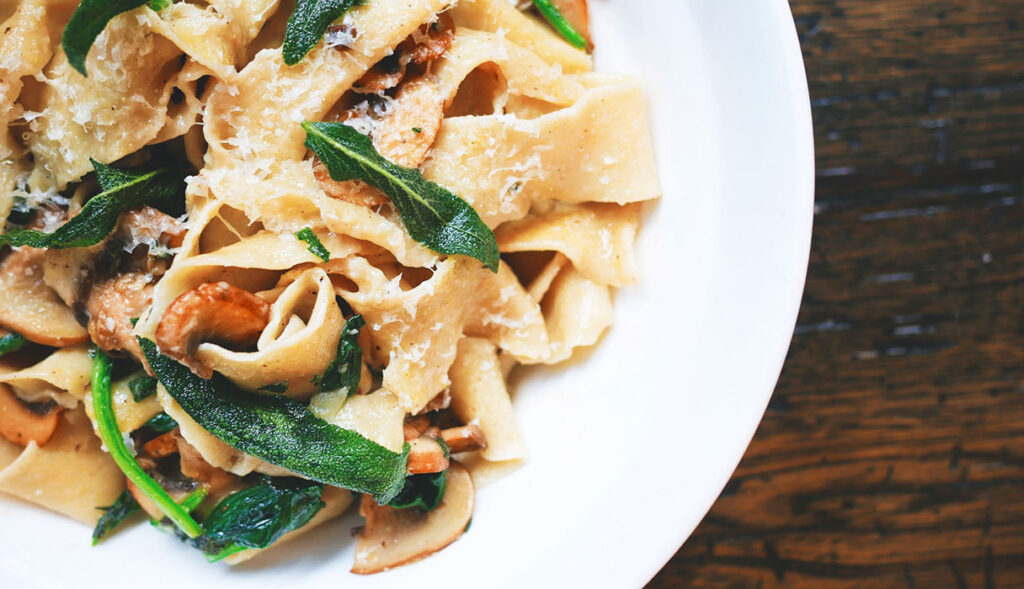
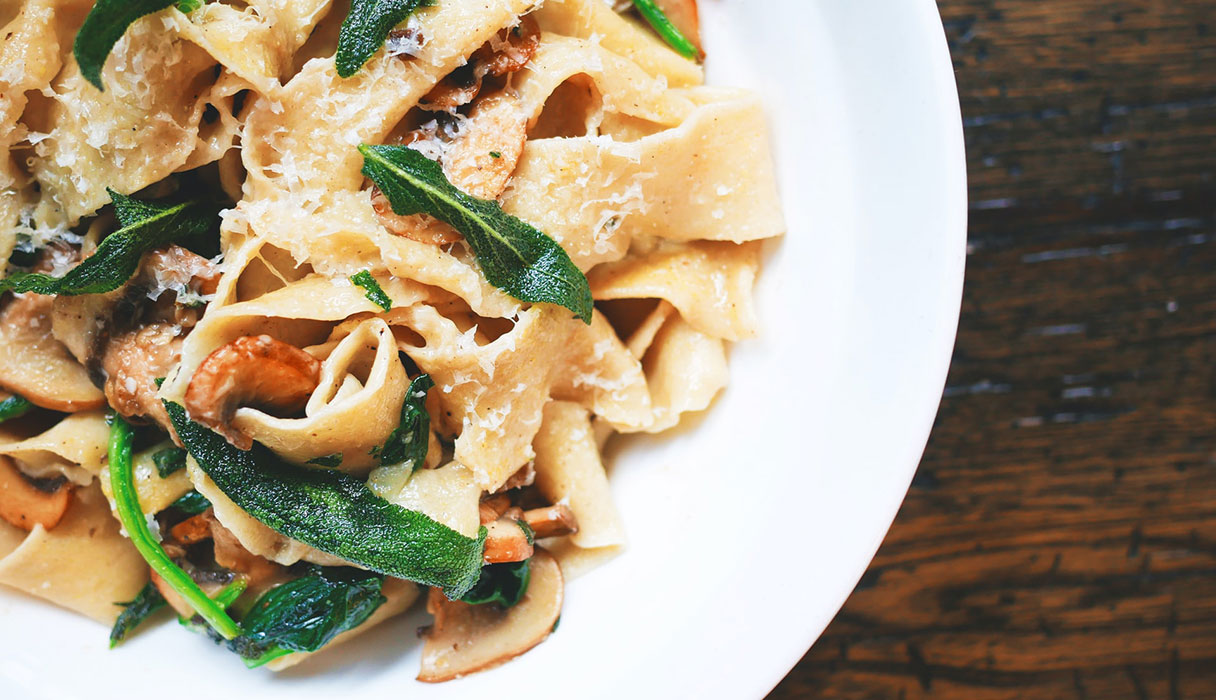
Whole wheat pappardelle or fettuccine matches the wide ribbons in the photo. Two ounces of dry whole wheat pasta has about 201 calories, close to the 211 calories in regular pasta, with more fiber. Any shape works if you cannot find wide noodles.
The cheese
Use 1% cottage cheese for the best balance. Full-fat versions work but add calories. Freshly grated parmesan melts more smoothly than the pre-shredded kind.
The vegetables
Baby spinach wilts in seconds and peas go straight into the pasta pot, so there is barely any extra work. Kale, arugula, broccoli or asparagus are easy swaps.
Easy ways to add even more protein
Want a bigger boost? Each of these is per serving, using USDA values:
| Add-in | Amount | Calories | Protein |
|---|---|---|---|
| Cooked chicken breast | 3 oz | 140 | 26.4 g |
| Tuna, canned in water | 3 oz | 99 | 21.7 g |
| Edamame | 1/2 cup | 94 | 9.2 g |
| Cooked lentils | 1/2 cup | 115 | 8.9 g |
Chicken turns this into a 50 g protein dinner. For another chicken-based option, try our chicken spinach pasta.
High protein pasta nutrition per serving
| Nutrient | Per serving |
|---|---|
| Calories | 374 |
| Protein | 25 g |
| Carbohydrate | 53 g |
| Fat | 9 g |
| Fiber | 7.7 g |
| Sugars | 5.9 g |
| Sodium | about 640 mg |
Calculated from USDA values for every ingredient, divided by 4 servings. Most of the sodium comes from the cottage cheese and parmesan, so taste before adding extra salt.
Tips for the creamiest high protein pasta
- Blend until silky. Any curds left in the sauce will stay grainy.
- Take the pan off the heat. Dairy sauces can split if they boil, so add the sauce to the hot pasta off the burner.
- Save pasta water. A splash of starchy water makes the sauce glossy and helps it cling.
- Season at the end. Cheese is salty, so add salt only after tasting.
Flavor variations
The basic high protein pasta sauce is a blank canvas. Try one of these twists:
- Lemon pepper: add the zest of one lemon and extra cracked black pepper.
- Roasted red pepper: blend 1/2 cup jarred roasted peppers into the sauce for a pink, smoky version.
- Herby green: blend a handful of basil and parsley with the cottage cheese.
- Spicy: add chili flakes to the garlic and finish with a little hot sauce.
- Mushroom: brown sliced mushrooms in the pan before adding the spinach.
Choosing a pasta for high protein pasta dishes
Whole wheat pasta is easy to find and works well here, but you have other choices. Pastas made from lentils, chickpeas or edamame are often higher in protein and fiber than wheat pasta, so check the nutrition label and compare servings by dry weight. Their textures vary, and some turn soft quickly, so cook them for the shortest time on the package.
Whatever you pick, weigh the dry pasta if you track calories. Two ounces of dry pasta per person is a good serving for a high protein pasta dinner that also includes plenty of vegetables.
Common mistakes to avoid
- Overcooking the pasta. Whole wheat noodles turn soft quickly. Start checking a minute before the package time.
- Adding cold sauce to cold pasta. The heat of freshly drained pasta warms the sauce gently.
- Skipping the acid. Lemon juice brightens the cheese and keeps the dish from tasting flat.
Storing and meal prepping high protein pasta
This dish packs well for lunches, and the protein-rich sauce keeps it satisfying through the afternoon. Portion it into four containers right after cooking, with a lemon wedge on the side to brighten it up after reheating.
Cool leftovers quickly and keep them in a sealed container in the fridge for up to 3 to 4 days. Reheat in a pan over low heat with a few spoons of water, stirring often, until it is steaming hot. The sauce thickens in the fridge, so the water is important.
If you enjoy lighter pasta dinners, try our pesto pasta with mushrooms, the pumpkin pasta bake or browse all of our lighter dinner recipes. Cottage cheese fans will also like our cottage cheese pancakes.
Frequently asked questions
How much protein is in this high protein pasta?
Each of the 4 servings has about 25 g of protein. It comes from the whole wheat pasta, the cottage cheese sauce, parmesan and peas, all calculated from USDA values.
Does cottage cheese sauce taste like cottage cheese?
Not once it is blended. It turns smooth and tastes like a mild, creamy cheese sauce, especially with parmesan, garlic and lemon.
Can I add more protein to high protein pasta?
Yes. Stir in 3 oz of cooked chicken breast per serving for about 26 g more protein, or add edamame for a plant-based boost.
Can I reheat this pasta?
Yes. Refrigerate leftovers for up to 3 to 4 days and reheat gently with a splash of water so the sauce loosens. High heat can make dairy sauces grainy.
Sources
- USDA FoodData Central: whole wheat and regular pasta, 1% cottage cheese, part-skim ricotta, heavy cream, parmesan, spinach, peas and add-ins.
- FoodSafety.gov: Leftovers and Food Safety.
- Dietary Guidelines for Americans.
Nutrition per serving is an estimate. This article is general information, not medical advice.
Creamy High Protein Pasta with Spinach and Peas (374 Calories, 25 g Protein)
Ingredients
Method
- Bring a large pot of salted water to a boil and cook the pasta according to the package, adding the frozen peas for the last 2 minutes.
- While the pasta cooks, blend the cottage cheese, parmesan, lemon juice and pepper until completely smooth.
- Warm the olive oil in a large skillet over medium-low heat and cook the garlic for 1 minute until fragrant. Add the spinach and stir until wilted.
- Scoop out 1/2 cup of the pasta water, then drain the pasta and peas.
- Take the skillet off the heat. Add the pasta, peas and the cottage cheese sauce, then toss with a splash of pasta water until glossy.
- Season with salt and chili flakes and serve straight away.